
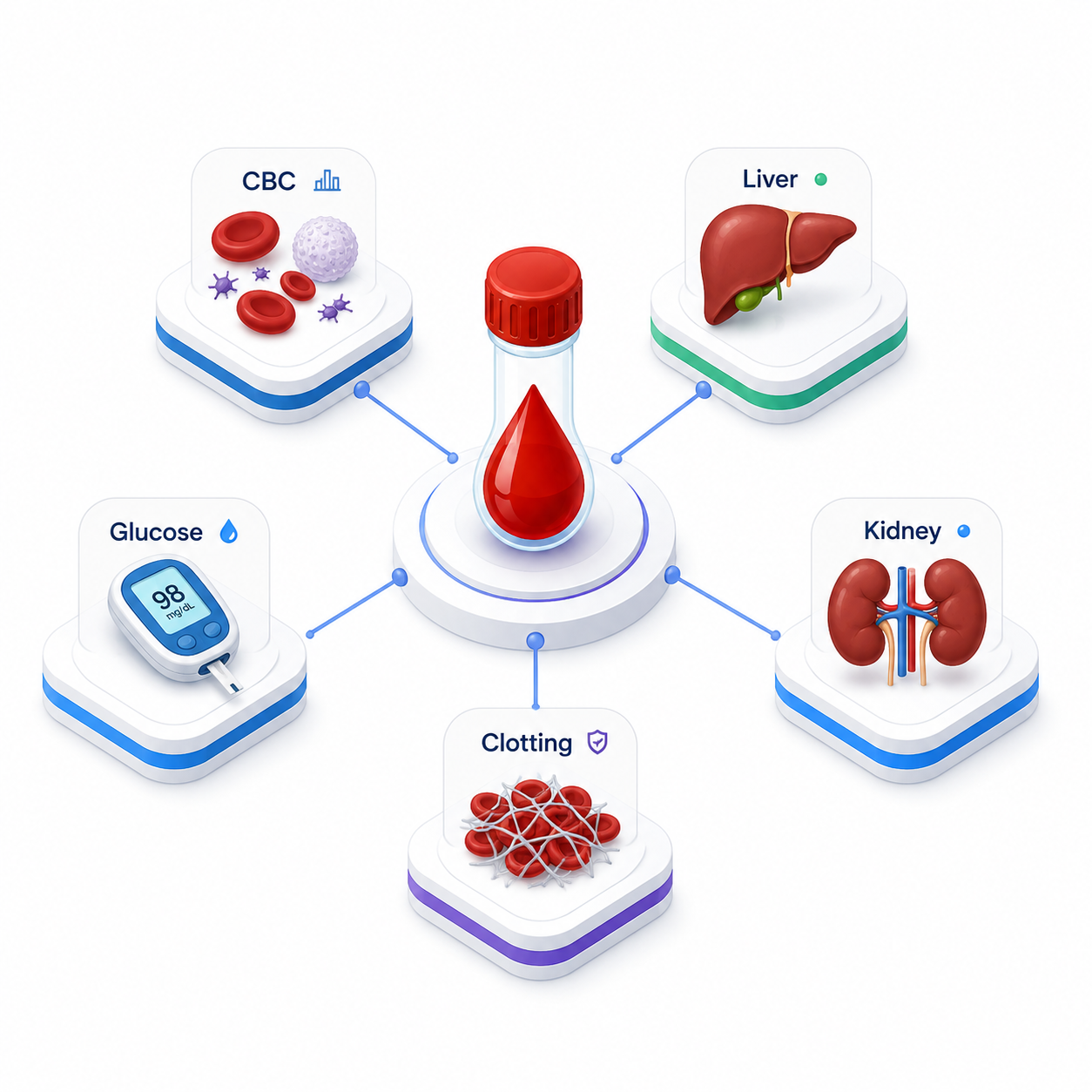
| Test | Main result checked | Most relevant when |
|---|---|---|
| CBC | Hemoglobin, white cells, platelets | Bone marrow or fat collection; anemia or infection risk |
| AST / ALT | Liver-cell injury | Liver disease, abnormal previous tests, medication use |
| Bilirubin / albumin | Liver-related function | Known or suspected liver disease |
| Creatinine / eGFR | Kidney function | Kidney disease, medication, sedation or general assessment |
| Glucose / HbA1c | Blood sugar control | Diabetes or invasive procedures |
| PT / INR / APTT | Blood clotting | Bleeding risk, anticoagulant use, invasive collection |
| HBV tests | Hepatitis B status | Allogeneic donor screening and other clinically indicated situations |
| HCV antibody / RNA | Previous exposure and current HCV infection | Allogeneic donor screening or abnormal HCV results |
| HIV | HIV infection | Allogeneic donor screening |
| HTLV-1 | HTLV-1 infection | Allogeneic donor screening |
| Parvovirus B19 | B19 infection | When required by donor risk assessment |
| hCG | Pregnancy | When pregnancy could change procedure safety |
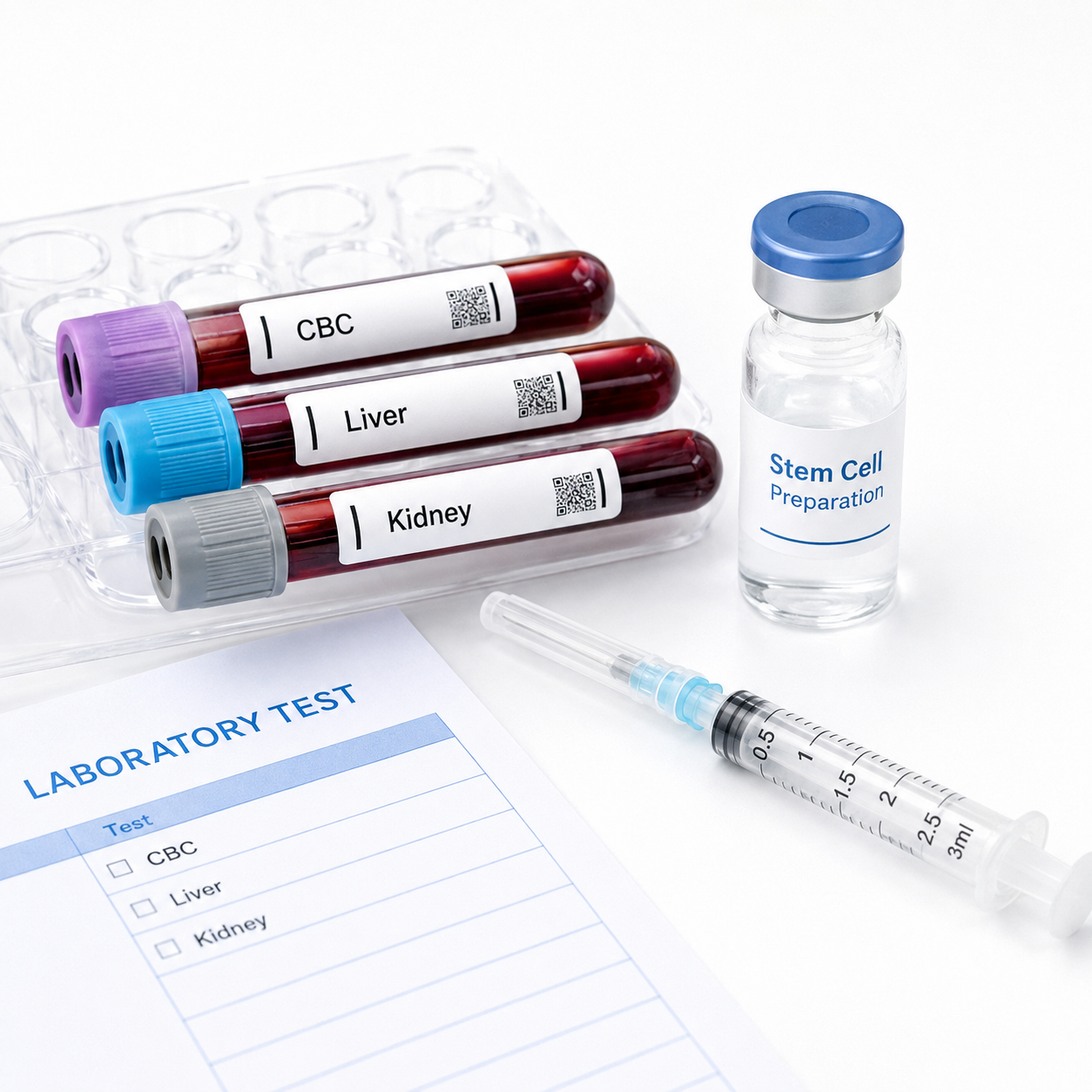
Before comparing laboratory lists, first confirm where the cells come from. Two treatments can both be called “stem cell therapy” while using different cells, different processing methods and different ways of giving the cells. The regenerative medicine procedures page explains these differences in more detail.
Donor-Cell Infection Tests
When cells come from another person, they are allogeneic cells. Japanese MHLW guidance requires the donor to be assessed for the following infections:
- hepatitis B virus (HBV);
- hepatitis C virus (HCV);
- human immunodeficiency virus (HIV);
- human T-cell leukemia virus type 1 (HTLV-1);
- parvovirus B19 when necessary.
Blood-based methods such as serology and nucleic-acid testing can be used as part of that assessment.[2]

If donor-derived processed cells will be given to an immunosuppressed patient, the same guidance says CMV, EBV and West Nile virus should also be checked when necessary.[3]
These requirements mainly apply to the donor and the cell source. They do not mean that every person receiving donor cells has to take exactly the same infection tests.
The situation is different with autologous treatment, where the patient’s own cells are used. In that setting, the full donor-screening approach is not automatically required. Infection testing may still be used to reduce cross-contamination during processing and to protect staff who handle the cells.[4]
That difference affects both the blood-test list and the way the treatment is handled. More detail is available in autologous vs. allogeneic stem cells and allogeneic stem cell therapy in Japan.
CBC Reference Ranges
A CBC is commonly checked when the treatment involves a procedure that can cause bleeding, or when the doctor needs to look for anemia, changes in white blood cells or a low platelet count.
| CBC result | Common adult reference range |
|---|---|
| White blood cells | About 4,500–11,000 cells/µL |
| Hemoglobin — men | About 13–18 g/dL |
| Hemoglobin — women | About 12–16 g/dL |
| Hematocrit — men | About 40%–55% |
| Hematocrit — women | About 36%–48% |
| MCV | About 80–100 fL |
| Platelets | About 150,000–400,000/µL |
These are general adult reference ranges, and individual laboratories can use slightly different limits.[5] They are not Japanese stem cell treatment eligibility cutoffs.
Low hemoglobin: the doctor may repeat the CBC or check iron, ferritin, vitamin B12, folate or other possible causes of anemia.
Low white cells or neutrophils: doctors may look more closely at infection risk. In this situation, the absolute neutrophil count (ANC) can be more useful than the total white-cell count alone.
Low platelets: this becomes more important before bone marrow aspiration, fat harvesting, biopsy or another procedure that may cause bleeding.
A platelet result outside the laboratory range does not automatically rule out treatment. The actual decision also depends on how low the count is, whether it is stable, whether the patient takes blood-thinning medicines and how invasive the planned procedure will be.
Liver and Kidney Results
Common liver tests include AST, ALT, ALP, GGT, bilirubin and albumin.[6]
| Finding | What doctors may check next |
|---|---|
| Mild AST / ALT elevation | Previous results, alcohol, medicines, supplements, exercise and liver history |
| Marked or unexplained AST / ALT elevation | Hepatitis testing and further liver assessment when indicated |
| High bilirubin | Liver disease, bile-duct problems or other causes |
| Low albumin | Liver disease, kidney disease, inflammation or poor nutrition |
AST and ALT limits are not identical in every laboratory. For an individual patient, the reference range printed on the actual report is more useful than a single cutoff found online.
Kidney testing usually includes creatinine and eGFR. Creatinine is measured directly in the blood. eGFR is an estimate of how well the kidneys are filtering.
If kidney function is reduced, doctors may need to adjust medication, fluid management or parts of the procedure. One low eGFR result does not automatically mean chronic kidney disease, especially after illness or dehydration.
Patients who already have significant liver or kidney disease may need more than the routine panel. The liver and kidney dysfunction page covers those situations in more detail.
Blood Sugar Numbers
HbA1c reflects average blood glucose over approximately the previous 3 months.[7]
| Category | HbA1c | Fasting plasma glucose |
|---|---|---|
| Normal diabetes-screening range | Below 5.7% | 99 mg/dL or below |
| Prediabetes range | 5.7%–6.4% | 100–125 mg/dL |
| Diabetes range | 6.5% or higher | 126 mg/dL or higher |
These are standard diabetes diagnostic ranges, not stem cell therapy acceptance limits.[8]
When a person has no clear diabetes symptoms, a result in the diabetes range usually needs to be confirmed with another measurement.
HbA1c does not require fasting. A fasting glucose test normally requires at least 8 hours without food.[9]
For treatment planning, poor glucose control matters most when the procedure involves an incision, tissue collection or another situation where infection and wound healing are important.
Clotting and Blood Thinners
PT, INR and APTT may be requested before an invasive procedure or when the patient already has a history of abnormal bleeding.
| Situation | What the clinic needs to know |
|---|---|
| Warfarin | Medication dose and INR |
| Apixaban, rivaroxaban or another direct oral anticoagulant | Drug name, dose, last dose and kidney function |
| Aspirin or clopidogrel | Why it is prescribed and whether the planned procedure can be performed safely |
| Previous abnormal bleeding | Bleeding history and any previous clotting test abnormalities |
A normal PT, INR or APTT does not show the effect of every anticoagulant. The medication list is still important even when routine clotting results look normal.
Do not stop a prescribed blood thinner on your own before treatment.
HBV Result Patterns
There is no single result called an “HBV test.” Several markers are used, and each tells the doctor something different.
- HBsAg: usually indicates current HBV infection when confirmed positive.
- Anti-HBs: can indicate immunity after vaccination or previous infection.
- Anti-HBc: shows previous or current exposure to the actual virus; vaccination alone does not normally cause anti-HBc positivity.
- HBV DNA: detects viral genetic material and may be used when the current infection status needs clarification.
CDC recommends HBsAg, anti-HBs and total anti-HBc as the standard three-test panel for general adult HBV screening.[10] This helps with interpretation, but it is not a rule that every Japanese stem cell patient must receive all three tests.
| Result pattern | Common interpretation |
|---|---|
| HBsAg − / anti-HBc − / anti-HBs + | Usually immunity from vaccination when vaccination history fits |
| HBsAg − / anti-HBc + / anti-HBs + | Previous HBV infection that has resolved |
| HBsAg + / anti-HBc + / anti-HBs − | Current HBV infection; other information distinguishes acute from chronic infection |
| HBsAg − / anti-HBc + / anti-HBs − | Several explanations are possible; further assessment may be needed |
After completion of a hepatitis B vaccine series, an anti-HBs level of at least 10 mIU/mL is generally considered an adequate vaccine response when checked at the appropriate time.[11]
Anti-HBs can fall over time. A later result below 10 mIU/mL does not automatically mean that someone who previously showed an adequate vaccine response has lost all protection.[12]
HCV Results
| Result | What it usually means |
|---|---|
| HCV antibody non-reactive | No HCV antibody detected; recent exposure may still require RNA testing |
| HCV antibody reactive | Past or current exposure; RNA testing is needed to identify current infection |
| HCV antibody reactive + HCV RNA detected | Current HCV infection |
| HCV antibody reactive + HCV RNA not detected | No current HCV infection in most cases |
CDC recommends HCV RNA testing after a reactive HCV antibody test.[13]
Timing also matters after a recent exposure. HCV antibodies usually take about 8–11 weeks to become detectable, while HCV RNA can usually become detectable in about 1–2 weeks.[14]
For medical review, a report that says only “HCV positive” is not enough. The clinic needs to know whether the positive result refers to the antibody test or the RNA test.
HIV and HTLV-1
HIV and HTLV-1 are specifically included in Japanese allogeneic donor screening.[15]
A reactive HIV screening result needs follow-up testing before it is treated as a confirmed diagnosis.
How soon a test can detect HIV depends on the test used:
| HIV test | Usual detection window after exposure |
|---|---|
| Nucleic-acid test (NAT) | About 10–33 days |
| Laboratory antigen/antibody test using blood from a vein | About 18–45 days |
| Rapid finger-stick antigen/antibody test | About 18–90 days |
| Antibody-only test | About 23–90 days |
These are CDC testing windows, not required waiting periods before regenerative medicine.[16]
HTLV-1 testing generally starts with an antibody screening test. If the result is reactive, further confirmation may be needed before the medical team decides whether the donor or treatment can proceed.
Other Infection Checks
Current Japanese allogeneic donor rules also cover:
- parvovirus B19 testing when necessary;
- CMV, EBV and West Nile virus testing when necessary in the relevant immunosuppressed-recipient setting;
- medical history involving infections such as syphilis, gonorrhea and tuberculosis;
- previous blood transfusion or transplantation history.
These points belong to donor eligibility assessment. They do not mean that every recipient needs a separate blood test for each condition.[17]
Tests by Collection Method
| Cell collection method | Tests that may receive more attention |
|---|---|
| Peripheral blood | CBC and infection testing when applicable |
| Bone marrow aspiration | Hemoglobin, platelets, ANC, bleeding risk and medication review |
| Adipose-tissue collection | CBC, bleeding risk, glucose, kidney/liver function and medication review |
A routine blood draw, bone marrow aspiration and fat collection are not equivalent procedures. Bone marrow and adipose collection involve more procedural risk, so the laboratory work may be broader. The stem cell treatment process in Japan shows how collection and treatment can differ.
When a Result Delays Treatment
| Finding | Typical next step |
|---|---|
| Low hemoglobin | Repeat CBC or investigate anemia |
| Low platelets | Repeat count, review medicines and assess bleeding risk |
| Low ANC | Review infection risk and the cause of neutropenia |
| High AST / ALT | Review medicines, alcohol, hepatitis results and previous liver tests |
| HBsAg positive | Complete HBV assessment; HBV DNA may be added |
| HCV antibody reactive | HCV RNA testing |
| Reactive HIV or HTLV-1 screen | Follow-up testing |
| High glucose / HbA1c | Assess diabetes control and procedure risk |
| High CRP with symptoms | Check for infection or another source of inflammation |
A result outside the laboratory’s normal range is not automatically a treatment failure. The value has to be judged against the planned procedure. Japan does not publish one universal platelet, ANC, ALT, HbA1c, CRP or eGFR cutoff that applies to every stem cell procedure.
Previous cancer, unstable liver or kidney disease, active infection and other significant health problems can also change eligibility. The stem cell therapy indications and contraindications in Japan page covers these condition-specific issues.
How Old Can Results Be?
There is no single Japan-wide validity period for all blood tests.
If a clinic says a result must be “within 30 days,” check whether that period starts from the blood collection date rather than the date printed on the laboratory report.
| Test type | Why an older result may be repeated |
|---|---|
| CBC | Can change after bleeding, infection, medication or illness |
| Creatinine / eGFR | Can change with dehydration, illness or medication |
| Glucose | Can change rapidly with diet, illness, stress and medication |
| Infection testing | A new exposure can occur after the original sample |
Ask the clinic for the maximum specimen age for each test on the date of collection or treatment. That gives you a usable deadline instead of a vague request for “recent blood tests.”
Using Overseas Lab Reports
A Japanese doctor needs to see exactly what was tested. An overseas report should include:
- patient name;
- date of birth or another patient identifier;
- specimen collection date;
- exact test name;
- numerical result or positive/negative result;
- unit;
- laboratory reference range;
- laboratory or hospital name.
| Useful wording | Too vague |
|---|---|
| HBsAg — Negative | Hepatitis B — Negative |
| HCV antibody — Non-reactive | HCV — Normal |
| HCV RNA — Not detected | Hepatitis C — Cleared |
A clinic may repeat a test if the result is too old, the test method is unclear, follow-up testing is missing or the patient’s health has changed.
Patients traveling to Japan can use the medical travel guide to check which medical records, translations and imaging documents should be prepared before departure.

Processed-Cell Safety Tests
Normal patient blood tests do not show whether processed cells became contaminated during manufacturing.
MHLW issued the second edition of its microbiological safety guideline for specified processed cells and related materials on June 12, 2026.[18]
The guideline covers microbiological risk during:
- cell collection;
- cell processing;
- storage;
- transport;
- administration.
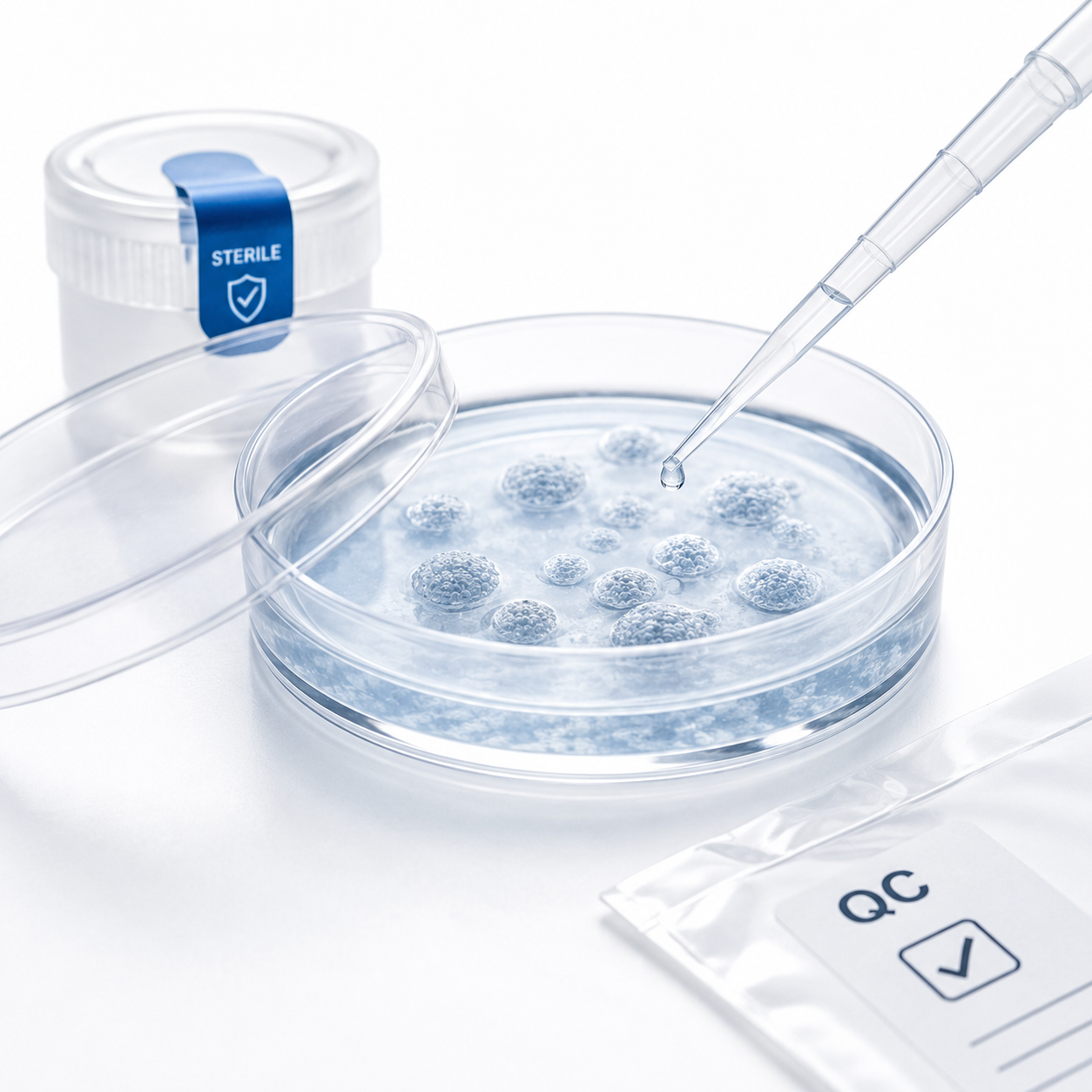
It discusses controls such as aseptic processing, environmental monitoring, sterility-related testing and mycoplasma testing.[19]
Testing has practical limits. Some cell preparations need to be administered too quickly for every conventional microbiological test to be completed before use, which makes manufacturing controls and release criteria important as well.[20]
If the treatment uses cultured or otherwise processed cells, ask which microbiological results are available before administration and where the processing takes place. The CPC Cell Processing Center in Japan page explains the role of these facilities.
PMDA Approval vs. Treatment Plan
A normal blood panel tells you nothing about whether the treatment itself has PMDA marketing approval.
The amended Act on the Safety of Regenerative Medicine took effect on May 31, 2025.[21]
PMDA-approved regenerative medical products go through a separate product-approval system. PMDA maintains an official list of approved regenerative medical products.[22]
Before treatment, confirm:
- your own cells or donor cells;
- the tissue source;
- whether cells are cultured;
- how the cells are administered;
- which Japanese regulatory route applies;
- whether the exact product has PMDA approval;
- the approved indication, if applicable.
The Japan regenerative medicine registration and compliance page explains the difference between these records.
Bone Marrow Transplant Tests
A hematopoietic stem cell transplant for leukemia, lymphoma, multiple myeloma or another blood disorder needs a much broader work-up than the regenerative medicine procedures discussed above.
Tests may include:
- HLA typing;
- ABO/Rh blood typing;
- broader infection screening;
- bone marrow examinations;
- disease staging;
- heart testing;
- lung testing;
- donor compatibility assessment.
Standard hematopoietic stem cell transplantation is treated separately from the regenerative medicine procedures discussed above in the current Japanese framework.[23]
If the planned treatment is a bone marrow, peripheral-blood stem cell or cord-blood transplant, use the transplant center’s own testing list.
Send These Questions to the Clinic
- What are the exact test names?
- Which tests are for me and which are for the donor?
- Which HBV markers are required?
- If HCV antibody is reactive, do you require HCV RNA?
- Is HIV antigen/antibody testing sufficient for this protocol?
- Is HTLV-1 testing required?
- Is parvovirus B19 testing required?
- Do I need PT, INR or APTT before cell collection?
- How old can each result be?
- Is the time limit based on the specimen collection date?
- Are overseas reports accepted?
- Do the reports need English or Japanese translation?
- Which tests will be repeated in Japan?
- Which results would postpone treatment?
- Who makes the final medical eligibility decision?
A provider should be able to name the test, explain why it is needed and tell you what happens if the result is abnormal. Those same points are useful when comparing stem cell hospitals in Japan and checking stem cell therapy safety.
Finally
For donor-derived cells in Japan, the clearest required infection checks are HBV, HCV, HIV and HTLV-1, with parvovirus B19 added when necessary. CBC, liver and kidney tests, glucose and clotting studies depend on the patient and the collection procedure rather than one national panel. Useful general reference figures include platelets of about 150,000–400,000/µL, WBC of about 4,500–11,000/µL, HbA1c below 5.7% in the usual non-diabetes range, and fasting glucose of 99 mg/dL or below. These figures help you read a laboratory report; they are not Japan-wide stem cell treatment cutoffs. Get the exact analyte, sample-age limit, overseas-report rules and abnormal-result policy from the clinic before testing.
Medical disclaimer: This article provides general medical information only. Laboratory reference ranges vary, and individual treatment requirements must be confirmed with the treating medical institution. Do not stop prescription medication or change medical treatment based only on this information.