
What you should know first
Stem Cell Anti-Aging
If you’re considering stem cells for age-related decline or a diagnosed condition, the real question isn’t whether studies exist — it’s whether the human evidence matches your exact diagnosis, the cell product in question and how it’s delivered. We’ll help you organize your records, compare published evidence and Japan’s regulatory information, and prepare the questions worth asking before you pay or travel.
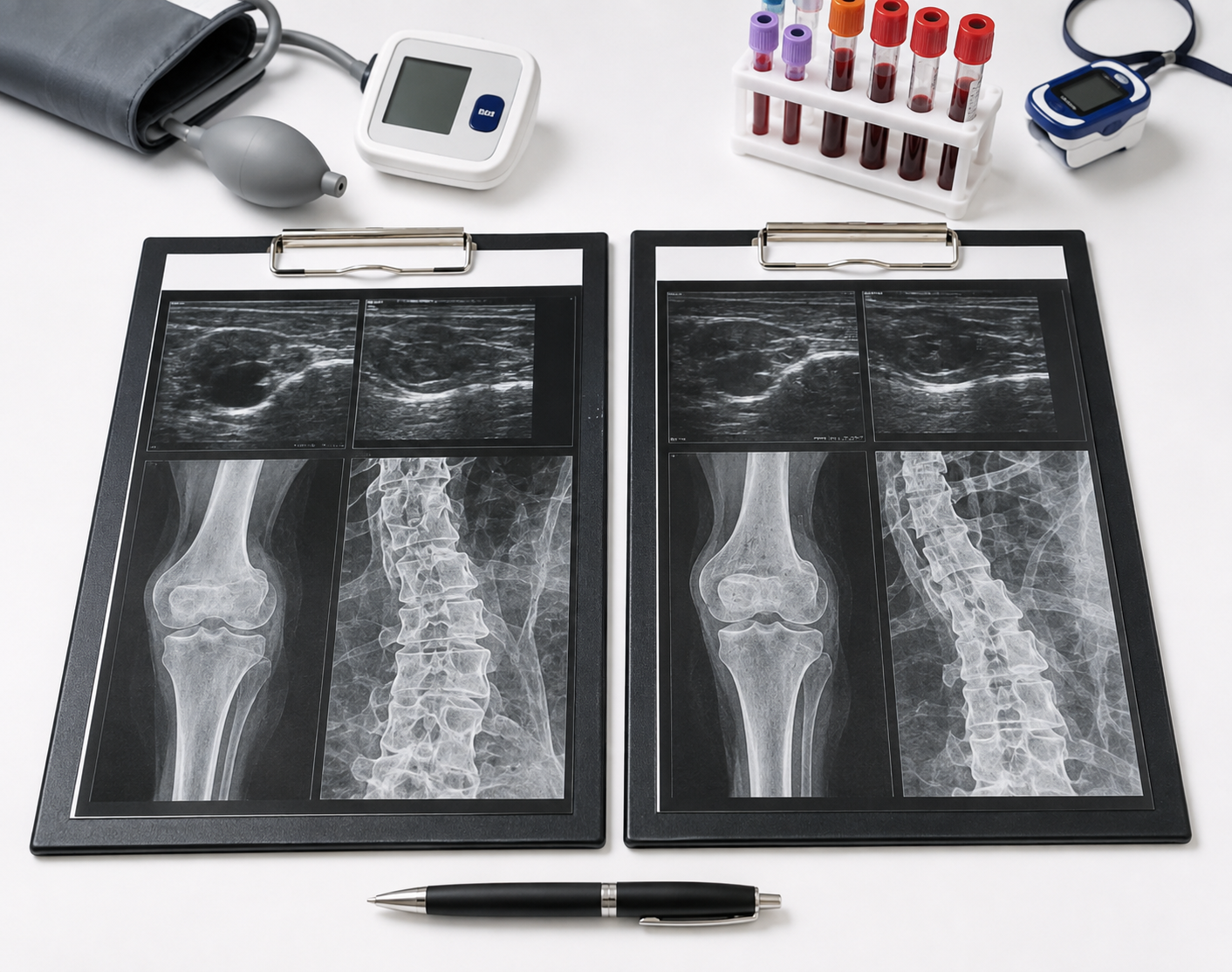
Imaging must be interpreted together with the original report, diagnosis, symptoms and treatment history.
What the data shows
Promising data exist, but only for defined patient groups
The strongest recent anti-aging-related signal comes from studies of clinical frailty, not healthy adults seeking general rejuvenation. The result of one study cannot be applied to a different cell source, dose, route or diagnosis.
Ambulatory adults with aging-related frailty were included in the published dose-finding analysis.[1]
The registered phase 2b trial enrolled older adults in this age range; it was not a study of healthy young or middle-aged adults.[9]
Placebo-adjusted difference for the highest-dose arm; 95% CI 17.1–109.6 m, p=0.0077.[1]
Placebo-adjusted difference; 95% CI −2.4–84.9 m, p=0.0635. The confidence interval included zero.[1]
Placebo or 25, 50, 100 or 200 million donor bone-marrow-derived mesenchymal stem cells. A multi-session or different-source proposal is not the same protocol.[9]
The primary endpoint was the 6-minute walk test. It measures physical function; it is not a measure of biological age, lifespan or disease cure.[1]
The 63.4-metre figure is a between-group estimate from one trial. It cannot be used as a personal prediction for an individual patient.
Frailty improvement is not the same as “age reversal.”
ISSCR guidance calls for rigorous clinical evaluation and oversight before stem-cell interventions are presented as established therapies.[2]
Your diagnosis matters
The diagnosis changes the answer
“Stem cell treatment” covers very different medical products and procedures. The evidence for one condition cannot be used as proof for another.

Established use
Where stem-cell treatment already has a defined clinical role
Established stem-cell use exists for selected patients
Hematopoietic stem cell transplantation is an established treatment pathway for selected leukemias, lymphomas, multiple myeloma, myelodysplastic syndromes and some other conditions. Outcome depends on the exact disease, disease status, transplant type, age and other risk factors.[3]
Human studies
Where research is relevant but does not establish general treatment
Human trials exist for defined frailty, not general rejuvenation
A 2017 randomized study included 30 older adults. The 2026 phase 2b analysis included 148 adults, ages 70–85 in the registered trial, and tested one IV infusion across four cell doses. The primary outcome was walking distance.[4][9]
Read the Japan anti-aging evidence guideA small phase 2a trial produced signals that still need larger confirmation
Forty-nine treated participants were analyzed for safety; mean age was 74.1 years. At week 39, pooled active groups showed 48.4% slower whole-brain volume decline and 61.9% slower left-hippocampal volume decline on MRI versus placebo. These were small-study secondary or exploratory findings, not proof of an established stem-cell treatment for Alzheimer disease.[5]
Condition-specific
Where the evidence must be checked separately
Use condition-specific evidence and regulatory documents
Eligibility depends on the injury type, timing, neurological status, cell product and regulatory pathway. Anti-aging or frailty results should not be used to predict neurological recovery.
See the spinal cord injury guideEvidence must match the exact cardiac or vascular condition
Cell-based and regenerative products are developed for specific indications and routes. A general “systemic repair” claim is not enough to predict benefit for heart failure, ischemic disease or cerebrovascular disease.
Review cardiovascular and cerebrovascular researchOvarian, dental, sexual-function and cosmetic goals need separate evidence
Do not assume that a mesenchymal cell study in frailty proves benefit for ovarian function, periodontal regeneration, erectile function, skin appearance or fatigue. Each question needs its own human evidence and safety review.
See the ovarian function research guideFive things we verify
Five details determine whether research is relevant to you
A study is useful only when the patient group and the intervention are close enough to the proposal you are considering.
Diagnosis
Normal aging, frailty and a named disease are different clinical questions.
Cell identity
Source, your-own-cell or donor status, processing and manufacturing method matter.
Dose and route
Cell count, IV infusion, local administration and number of sessions cannot be treated as interchangeable.
Regulatory status
A registered trial, an approved product and a regulated medical-practice pathway do not mean the same thing.
Outcome
Walking distance, symptoms, imaging and laboratory markers do not automatically prove longer survival.

Your history changes the risk
Your medical history can change the risk more than the marketing label
Do not stop or change prescribed medicines based on online information. A qualified medical professional needs the full history before making an eligibility decision.
“Unapproved” is a safety question, not just a paperwork question.
FDA patient guidance says it has received reports of blindness, tumor formation, infections and other serious harms after unapproved regenerative-medicine products. FDA also states that a ClinicalTrials.gov listing or company registration does not by itself mean a product is approved or legally marketed. These are reported hazards, not incidence rates for every stem-cell product.[10]
Have records, a quote or a proposal already?
Send what you have. We can help you identify the missing questions before you make a commitment.
Japan’s regulatory picture
Do not treat every Japan regenerative-medicine pathway as the same thing
Japan uses separate legal frameworks for regenerative medical practice and for commercial regenerative medical products. PMDA states that the Act on the Safety of Regenerative Medicine and the PMD Act took effect in November 2014.[6]
Two frameworks
Medical practice and product approval are separate
Japan’s Safety Act and PMD Act have operated since November 2014. The Safety Act covers regenerative-medicine practice and research plans; the PMD Act regulates commercialization of regenerative medical products.[6]
PMDA example 01
Temcell — September 2015
PMDA lists Temcell as human donor-derived bone-marrow mesenchymal stem cells approved in September 2015. The approval belongs to that named product and its regulatory indication, not to “MSC” use in general.[7]
PMDA example 02
Stemirac — December 2018
PMDA lists Stemirac as human own-cell bone-marrow-derived mesenchymal stem cells with conditional and time-limited approval in December 2018. That status cannot be transferred to an unrelated anti-aging claim.[7]
Trial registration
A study listing is not marketing approval
A trial record is useful for checking protocol details, but it does not prove that the intervention is an approved treatment. FDA patient guidance makes the same distinction for ClinicalTrials.gov listings.[10]
What the studies actually found
Three studies show why patient group and outcome matter
Frailty: 30 participants
A small randomized, double-blind phase II study tested IV donor-derived mesenchymal stem cells in older adults with frailty. It is useful as early human evidence, but its size limits how far the results can be generalized.[4]
Mild Alzheimer disease: 49 in the safety analysis
Mean age was 74.1 years. At week 39, pooled active groups had 48.4% slower whole-brain volume decline and 61.9% slower left-hippocampal volume decline on MRI versus placebo. The study was phase 2a, small, and the authors called for larger trials.[5]
Frailty: 148 in the published phase 2b analysis
The registered trial used one IV infusion of 25, 50, 100 or 200 million cells or placebo in adults ages 70–85. The reported placebo-adjusted 6-minute-walk difference was 63.4 m at month 9; at month 6 it was 41.3 m and the 95% confidence interval crossed zero.[1][9]
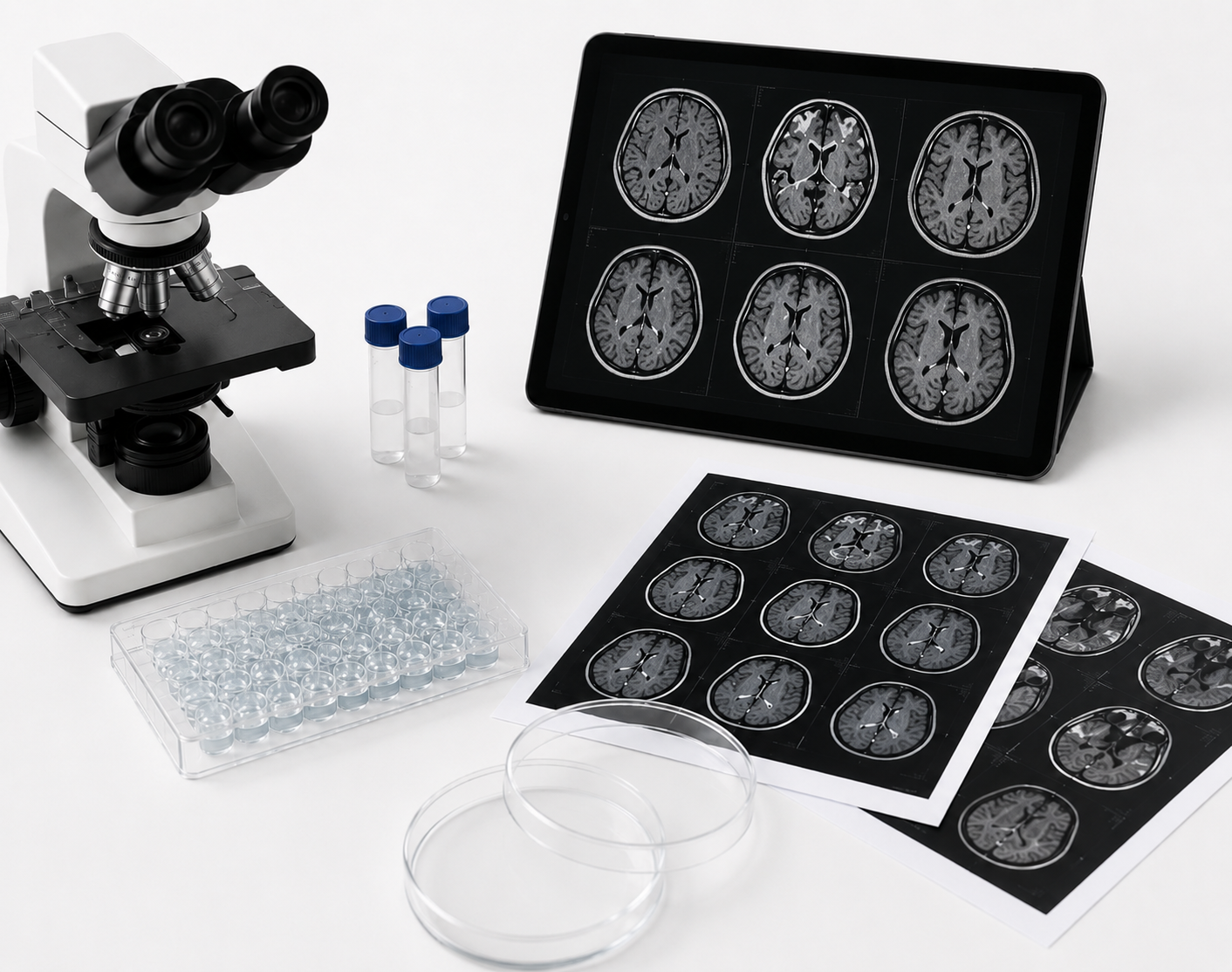
FDA approved Ryoncil in December 2024 for steroid-refractory acute graft-versus-host disease in children from 2 months of age. Its supporting study included 54 pediatric patients and reported a 70% overall response at day 28. This is evidence for that product and indication only; it is not anti-aging evidence.[8]
What you should ask about cost
A price is only useful when you know what it includes
None of the cited clinical trials or regulatory sources establishes a universal patient price for “stem cell anti-aging.” Compare quotes only after the exact intervention and the full care pathway are identified.
Assessment
Eligibility review, consultation and pre-treatment tests.
Cell source
Collection if needed, donor source and processing.
Quality testing
Identity, sterility and relevant release testing.
Administration
Dose, route, number of sessions and procedure-related care.
Monitoring
Laboratory tests, imaging when indicated and adverse-event review.
Travel support
Translation, coordination, local transport and additional visits.
Ask for the cell source, product description, dose, route, session count, included tests, follow-up period, cancellation terms and which costs may be charged separately.

What to measure, and when
Define what will be measured before anything starts
There is no universal anti-aging recovery timeline. Follow-up should match the route, procedure, diagnosis and risk profile.
Record the diagnosis, current function, medicines, relevant laboratory results and imaging so later change can be compared with a real baseline.
Document infusion or procedure reactions, infection, new symptoms and unexpected medical visits. The exact monitoring period depends on the product and route.
The 2026 study reported the 6-minute walk comparison at months 6 and 9. Those time points are research follow-up, not a guaranteed recovery schedule.[1]
The 2025 phase 2a study assessed clinical and MRI outcomes at week 39. An MRI percentage is not the same as a percentage improvement in memory or daily function.[5]
Ask what objective result would justify another session. A preset package should not be treated as proof that repeated dosing is necessary for your condition.
How we can help
A clearer decision before you commit time or money
Our service is designed around the information you already have, the questions you still need answered and the practical steps required to obtain a qualified medical opinion.
Send your information
Diagnosis, recent notes, medicines, test results, imaging reports and any proposal or quote.
Evidence matching
We compare the stated cell type, indication, dose and route with peer-reviewed studies and public regulatory information.
Questions and cost check
We organize the points that still need direct answers, including product identity, risks, total fees and follow-up.
Coordination support
When you choose to seek a medical opinion, we can assist with appointment preparation and language coordination.
You do not need to prepare a perfect file before contacting us. Start with the documents or questions you already have.
What to read next
Continue with the question that matches your situation
Use the more specific guide when your concern is a named condition, Japan safety, medical travel or pre-treatment screening.
Quick answers
Short answers to the questions that matter most

Is stem cell anti-aging proven?
No. Human studies exist for narrower conditions such as aging-related frailty, but no stem-cell intervention has established reversal of normal human aging or longer lifespan.
Can a frailty study predict whether my disease will improve?
No. Your diagnosis, cell product, dose, route, disease severity and regulatory pathway must match closely enough for a study to be relevant.
Can I expect to walk 63.4 metres farther?
No. The 63.4-metre figure was the placebo-adjusted group difference at month 9 for the highest-dose arm in one frailty trial, with a 95% confidence interval of 17.1 to 109.6 metres. It is not an individual prediction. At month 6, the reported difference was 41.3 metres and its confidence interval crossed zero.
Does a ClinicalTrials.gov listing mean an intervention is approved?
No. Trial registration shows that a study is registered; it does not by itself mean a product is approved or legally marketed. Regulatory status must be checked separately for the exact product, indication and country.
Is there a survival rate for stem cell anti-aging?
No validated percentage exists. For diseases where stem-cell transplantation is established, survival data must be taken from the specific disease, treatment type and patient-risk group.
How much should I expect to pay?
There is no single evidence-based price. Ask for a written total covering the exact cell intervention, tests, dose, route, session count, monitoring, follow-up and support costs.
What should I send first?
Your diagnosis, recent medical notes, medicine list, relevant laboratory results, imaging reports, previous treatment history and the complete proposal or quote you are considering.
Check the sources
Public authorities and peer-reviewed research
Now what?
Get the unanswered questions clear before you make a commitment.
Share your diagnosis or main concern, your available records and any proposal you’re looking at. We’ll help you organize the evidence questions, cost points and practical next steps for a qualified medical review.
For LINE, open the app and search the phone number above. Phone-number search availability depends on the account’s LINE privacy settings.