

Medical Summary
Keep this to 1–2 pages. The doctor should be able to understand your main medical situation without going through every report first.
- Your exact diagnosis
- Date of diagnosis
- When symptoms started
- Main symptoms now
- Current severity
- Current walking, movement, or daily-living limits
- Important test findings
- Previous treatments
- How long each treatment helped, if at all
- Previous surgery
- Current medications
- Major allergies
- Other important diseases
- Previous stem cell, PRP, or other regenerative procedures
- Recent hospitalization, infection, surgery, or major health change
Where possible, use real measurements instead of vague words.
Right knee osteoarthritis diagnosed in March 2023. Pain is mainly on the inner side of the knee. I can walk for about 15 minutes before pain forces me to stop. MRI performed May 12, 2026. Previous treatment includes physical therapy, oral NSAIDs, and two corticosteroid injections. The first injection reduced pain for about six weeks. No previous knee surgery.
You can write this summary yourself if needed. If your doctor has already prepared a referral letter or medical summary, send that too. Your own summary is useful for giving context, but it should not replace original diagnosis, imaging, laboratory, pathology, or surgery records when those documents are available.
Medical-record review is normally part of the stem cell treatment process in Japan.
Diagnosis Records
Use the strongest document you have to show what condition has actually been diagnosed.
- Orthopedic specialist report
- Neurologist report
- Rheumatologist report
- Cardiologist report
- Oncologist report
- Hospital discharge summary
- Pathology or biopsy report
- EMG or nerve-conduction report
- Other disease-specific diagnostic reports
A medical problem list that only says “knee osteoarthritis,” “multiple sclerosis,” or “spinal cord injury” gives the reviewing doctor very little detail. If a specialist report exists, send it.
Do not leave out abnormal results, failed treatments, or previous complications. Those details can directly affect indications, contraindications, and treatment safety.
Current Function
For joint, spine, and neurological conditions, what you can do today matters just as much as the diagnosis name.
Give 3 types of measurable information when they apply:
- Distance: how far you can walk
- Time: how long you can walk, stand, or use the affected limb
- Assistance: whether you walk independently or use a cane, walker, or wheelchair
You can also include:
- How many stairs you can climb
- Whether you can stand from a chair without help
- Whether you can transfer from a bed to a chair independently
- Movement of the affected joint
- Arm, hand, or grip function
- Weakness or numbness
- Balance problems
- Ability to dress, wash, work, or perform normal daily activities
I can walk about 200 meters with a cane before right knee pain forces me to stop.
This tells the doctor far more than saying your condition is “severe.”
If your medical team has already recorded a disease-specific score, include the latest documented result. Do not calculate a clinical score yourself unless the provider specifically asks you to complete one.
Imaging
For each important scan, send 2 items when available:
- The written radiology report
- The complete original imaging study
DICOM is the international standard used for medical imaging data.[1]
Ask the imaging center for the complete DICOM files. A few screenshots or phone photos are not a good substitute when the full study is available, because the doctor may need to review slices or sequences you did not select.
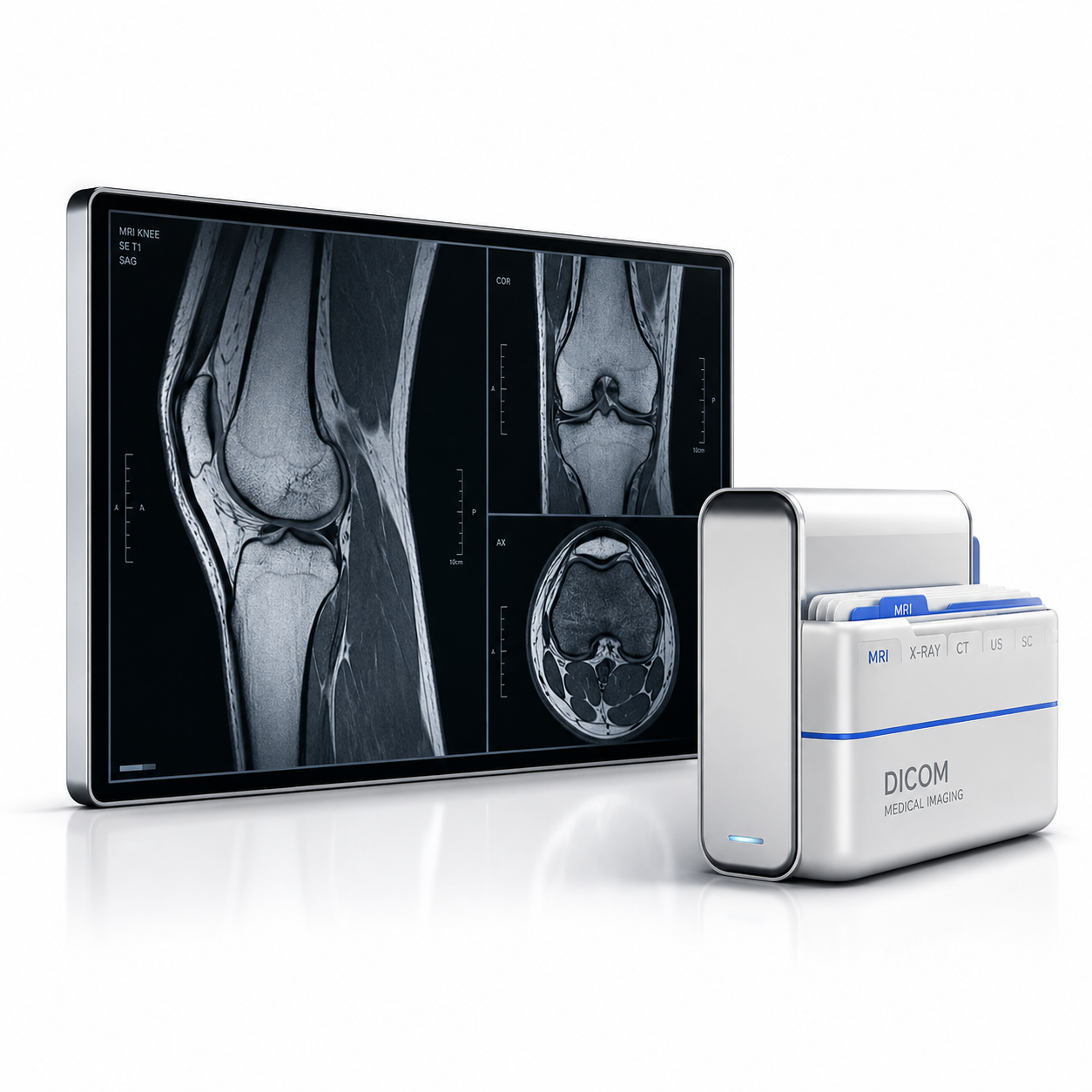
- Knee: relevant X-rays and MRI
- Hip: hip or pelvic X-rays and MRI when available
- Shoulder: MRI or ultrasound when relevant
- Spine: cervical, thoracic, or lumbar MRI; CT when bone structure or surgical hardware needs review
- Neurological disease: relevant brain or spinal MRI
Before sending the files, check 3 details:
- Correct body part
- Correct left or right side
- Correct scan date
A label such as Right knee MRI — May 12, 2026 is much easier to review than a file simply named “Knee MRI.”
Imaging Dates
Do not assume every MRI, CT, or X-ray must be less than three or six months old. There is no single rule that applies to every case.
A newer scan may be needed when:
- Your symptoms changed significantly
- You had surgery after the previous scan
- You had a new injury
- Your diagnosis changed
- The previous scan no longer represents your current condition
New loss of bladder or bowel control, rapidly worsening weakness, or another sudden neurological change needs prompt local medical assessment rather than an overseas consultation.
Blood Tests
Send recent results you already have. Depending on your condition and planned treatment, useful tests may include:
- Complete blood count
- Hemoglobin
- White blood cell count
- Platelets
- Creatinine
- eGFR
- AST
- ALT
- Bilirubin
- Albumin
- Glucose
- HbA1c when relevant
- PT, INR, or APTT when bleeding risk or blood-thinner use is relevant
- CRP or ESR when relevant to the condition
Keep these 6 items visible on every laboratory report:
- Test name
- Result
- Unit
- Reference range
- Test date
- Laboratory or hospital name
Do not convert the units yourself. One abnormal result does not automatically rule out treatment; send the original report so the physician can judge it in context.

Infection Tests
The provider may ask for testing for:
- Hepatitis B
- Hepatitis C
- HIV
- Syphilis
- Other infections required by the treatment protocol
Japan’s Ministry of Health, Labour and Welfare publishes microbiological safety guidance covering infection control for processed cells.[2]
Before paying for testing, confirm these 4 points:
- Exact test names
- Required test method, if specified
- Maximum accepted age of the results
- Whether testing will be repeated in Japan
A generic “stem cell infection panel” may not match the clinic’s actual requirements.
Medications
Include prescription medicines, injections, over-the-counter drugs, vitamins, supplements, and herbal products.
For each important medication, record at least 4 details:
- Generic name when known
- Dose
- Frequency
- Reason for taking it
For weekly, monthly, or infusion drugs, add the latest dose date.
Adalimumab 40 mg every two weeks — last injection July 28, 2026.
Also list important medicines stopped recently, especially:
- Steroids
- Antibiotics
- Anticoagulants
- Antiplatelet medicines
- Immunosuppressants
- Biologic drugs
If you take warfarin, apixaban, rivaroxaban, dabigatran, clopidogrel, aspirin, or another drug that affects clotting, do not stop it on your own before treatment.
Allergies
Write down the substance and what actually happened.
Penicillin — widespread hives — 2019.
Also report important reactions to:
- Antibiotics
- Local anesthetics
- General anesthesia
- CT or MRI contrast
- Latex
- Adhesives
- Blood products
If you are not sure whether the reaction was a true allergy, simply describe the reaction as accurately as you can.

Surgery and Implants
For major surgery, provide:
- Procedure name
- Date
- Hospital
- Body side or spinal level
- Implants or hardware
- Important complications
If the surgery involves the area now being considered for treatment, include the operation report when available.
Report implanted devices such as:
- Pacemaker
- Implantable defibrillator
- Joint replacement
- Spinal screws, rods, plates, or cages
- Cochlear implant
- Neurostimulator
- Insulin pump
Send the implant card, manufacturer, and model number when available.

Cancer History
Provide:
- Cancer type
- Stage
- Pathology report
- Surgery
- Chemotherapy
- Radiation therapy
- Immunotherapy
- Date of last cancer treatment
- Current status
- Latest oncology follow-up
- Recent surveillance imaging when relevant
Include a past cancer even if it is currently in remission.
Immune Conditions
If you have an autoimmune disease, transplant history, or immune disorder, provide:
- Exact diagnosis
- Whether the disease is currently stable or active
- Date of the latest flare
- Recent hospitalization
- Current steroid dose
- Immunosuppressant treatment
- Latest biologic injection or infusion date
Heart Disease
If you have significant cardiovascular disease, send the records you already have, such as:
- Cardiologist report
- ECG
- Echocardiogram
- Holter-monitor report
- Cardiac catheterization report when relevant
- Previous heart surgery records
These tests are not automatically required for every patient. Additional cardiac testing should be based on the physician’s request.
Diabetes
Provide:
- Type of diabetes
- Recent HbA1c when available
- Current diabetes medication
- Insulin dose when applicable
- History of severe low blood sugar
- Kidney disease
- Neuropathy
- Foot ulcers
- Vascular disease
- Recent infections
The records needed for cell-based treatment questions for diabetes can be very different from those used for an orthopedic procedure.
Previous Regenerative Treatment
If you have already had regenerative treatment, record these 6 key details:
- Treatment date
- Type of cells or procedure
- Cell source
- Whether the cells were cultured or otherwise processed
- Administration route
- Outcome and complications
Add the clinic name, country, cell dose when known, number of treatment sessions, and how long any benefit lasted.
Include treatment certificates, discharge reports, or cell-processing documents when available.
PRP belongs in your previous treatment history, but PRP is not stem cell therapy. PRP, bone marrow concentrate, cultured cells, and adipose-derived cell procedures should be recorded separately.
Cell Source and Treatment Route
If your own cells are collected from fat, bone marrow, blood, or another tissue, the doctor may need records that help assess:
- Bleeding risk
- Blood-thinner use
- Current infection
- Previous surgery at the collection site
- Anesthesia or sedation risk
The differences between autologous and allogeneic stem cells can affect screening and treatment planning.
Donor testing and manufacturing records are normally handled by the provider, manufacturer, or cell-processing facility rather than collected by the patient. A cell processing center (CPC) handles cell-processing work separately from your personal medical-record review.
The treatment route also changes what the doctor may need to check. A joint injection, intravenous administration, and a specialized neurological procedure do not use the same safety review.
Orthopedic Records
For knee, hip, shoulder, ankle, or other joint conditions, provide:
- Orthopedic diagnosis
- Relevant X-rays
- MRI when available
- Previous injury records
- Previous surgery
- Physical therapy history
- Previous corticosteroid injections
- Previous hyaluronic acid injections
- Previous PRP or cell-based procedures
- Pain location
- Current walking or activity limits
For knee joint disorders, send both imaging and current functional information. The scan shows the joint; your walking distance, pain, and daily limits show how much the condition affects you.
Spine Records
Provide:
- MRI or CT of the affected spinal level
- Spine specialist or neurologist report
- Previous spine surgery records
- Current neurological examination when available
- Pain-management history
Describe the exact location and side of pain, weakness, or numbness.
Numbness extends from the right buttock to the outer calf, with weakness when lifting the right foot.
Neurological Records
Depending on the disease, provide:
- Neurologist report
- Brain MRI
- Spinal MRI
- EMG or nerve-conduction studies
- EEG when relevant
- Lumbar-puncture results when relevant
- Rehabilitation reports
- Clinical scores already recorded by your medical team
For progressive disease, send older and newer records that make the change over time clear.
Spinal Cord Injury
Provide:
- Date of injury
- Cause of injury
- Neurological level
- Complete or incomplete classification when documented
- Surgery records
- MRI or CT
- Rehabilitation reports
- Current motor function
- Current sensory function
- Bladder and bowel function
- Latest neurological assessment date
If available, include a clinician-completed ISNCSCI examination. The American Spinal Injury Association’s 2026 standards provide a standardized way to assess neurological function after spinal cord injury.[3]
This information is useful when assessing spinal cord injury because the diagnosis name alone does not show the current neurological level or function.
Recent Health Changes
Tell the provider before treatment or travel if any of these happen after your records were reviewed:
- Fever
- Active infection
- New antibiotic treatment
- Open wound
- Hospital admission
- New surgery
- New diagnosis
- Major medication change
- New cancer or heart problem
- Major worsening of neurological symptoms
Initial Review and Final Clearance
Use a simple 2-stage approach when preparing records.
Initial review:
- Medical summary
- Diagnosis or specialist report
- Relevant imaging
- Existing recent laboratory results
- Medication list
- Major medical history
Final clearance may require:
- Updated blood tests
- Infection testing
- Coagulation testing
- Newer imaging
- Cardiac assessment when needed
- Pregnancy testing when relevant
- Other treatment-specific tests
Initial acceptance does not guarantee that the procedure will go ahead.
Translation
Ask which records need translation before paying to translate the whole file.
Start with:
- Medical summary
- Diagnosis report
- Latest specialist report
- Imaging report
- Pathology report
- Important laboratory results
- Relevant operation report
Keep medicine names, doses, laboratory values, and units exactly as shown in the original.
Keep the original document together with the translation. If an older record uses a different surname or English spelling, tell the provider that both names belong to the same patient.
File Preparation
Use PDF for written reports and keep imaging in DICOM format when possible.
Each report should keep these details visible:
- Patient name
- Test date
- Hospital or laboratory name
- Test or procedure name
- Result
- Units and reference range when relevant
Use clear file names:
- 2026-06-18_Brain-MRI_Report.pdf
- 2026-07-02_Blood-Test.pdf
- 2025-11-10_Oncology-Followup.pdf
For a large record package, a simple 9-folder structure works well:
- Medical Summary
- Diagnosis
- Imaging Reports
- DICOM Imaging
- Laboratory Tests
- Medications and Allergies
- Surgery
- Other Medical Conditions
- Previous Regenerative Treatment
This is an organization method, not a Japanese medical requirement.

Missing Records
If an old report cannot be obtained, provide:
- Approximate date
- Hospital name
- Procedure or diagnosis
- Body area treated
- Known complications
- Newer records that show the result
Lumbar fusion performed around 2014 in California. Original operation report is no longer available. Current CT shows L4-L5 instrumentation.
Do not invent an exact date, diagnosis, procedure name, or implant model if you are not sure.
Record Dates
Do not assume blood tests must be less than 30 days old or that an MRI must be less than six months old. There is no single Japan-wide time limit for every regenerative medicine procedure.
Ask the provider for:
- Maximum accepted age of blood tests
- Maximum accepted age of infection tests
- Maximum accepted age of imaging
- Whether testing must be repeated in Japan
Send your existing records before paying for repeat MRI, CT, laboratory testing, ECG, or echocardiography.
Japan Rules
Check 3 separate regulatory questions:
- Is the procedure being provided as treatment under a Regenerative Medicine Provision Plan?
- Is it being conducted as research through jRCT?
- Is a named regenerative medical product approved by PMDA for the proposed use?
Japan’s Act on the Safety of Regenerative Medicine applies to covered regenerative medicine and specified cell-processing activities. Changes to the law and related rules took effect on May 31, 2025.[4]
For regenerative medicine provided as treatment rather than research, new provision plans are submitted through the Ministry of Health, Labour and Welfare’s e-Regenerative Medicine system. Plans conducted as research are submitted through jRCT.[5]
The Ministry publishes treatment-plan information that can include the medical institution, treatment name, certified committee, and patient explanation and consent documents.[6]
A listed treatment plan is not the same as PMDA approval of a regenerative medical product.
PMDA separately publishes approved regenerative medical products and product review information.[7][8]
The site’s Japan regenerative medicine registration and compliance page explains the difference between a treatment plan, research registration, and PMDA product approval.
Before You Travel
- What is the exact treatment or product name?
- What cells are being used?
- Are they my own cells or donor-derived?
- Are the cells cultured or expanded?
- How will they be administered?
- Why does the physician think I may be suitable?
- Which records were reviewed?
- Which additional tests are required?
- What important risks apply?
- What happens if treatment is cancelled after I arrive?
- What follow-up is required after I return home?
- Which Japanese regulatory route applies?
- If it is research, what is the jRCT registration information?
- If a PMDA-approved product is used, what is its approved indication?
The phrase “approved in Japan” is too vague on its own. Ask what has actually been filed, registered, or approved.
Privacy
Japan’s Act on the Protection of Personal Information includes medical history within “special care-required personal information.”[9]
Send records only through a verified provider or authorized service. Confirm whether your records may be shared with physicians, translators, or a cell-processing facility.
The site’s health data and medical records policy contains more information about handling medical records during international coordination.
Red Flags
- Accepts you without reviewing diagnosis records
- Cannot identify the physician responsible for medical review
- Ignores important medications
- Ignores active infection or cancer history
- Guarantees eligibility before reviewing your case
- Promises a cure or guaranteed improvement
- Cannot identify the cell source
- Cannot explain the administration method
- Cannot explain why a requested test is needed
- Uses “approved in Japan” without giving the exact regulatory status
When checking a stem cell provider in Japan, look at the physician review, exact cell source, treatment route, evidence, and regulatory status rather than price or advertised cell count.
What You Usually Do Not Need
- Old records for minor unrelated illnesses
- Routine dental records unrelated to treatment
- Hundreds of pages of duplicate nursing notes
- Multiple copies of the same laboratory report
- Minor unrelated procedures that do not affect treatment safety
Prioritize records that show your diagnosis, current condition, previous treatment, imaging, medications, and major safety risks.
Final Checklist
Organize the first review around these 10 items:
- 1–2 page medical summary
- Diagnosis or key specialist report
- Relevant imaging report
- Original DICOM images when available
- Recent laboratory results already available
- Medication, supplement, and allergy list
- Relevant surgery and implant records
- Major medical-condition records
- Previous regenerative-treatment and current functional records
- Translation if required
Finally
Start with the 5 core records: a 1–2 page medical summary, diagnosis report, relevant imaging, existing laboratory results, and medication plus major medical-history list. Keep the full DICOM study, preserve all 6 key fields on laboratory reports, and use real measures such as walking distance or time when describing function. Add cancer, heart, immune, surgery, implant, or previous regenerative-treatment records only when they apply to you. Before paying for repeat tests, get the exact test name and validity period from the physician. Before traveling, confirm whether the treatment is filed under Japan’s treatment-plan system, registered as research through jRCT, or uses a PMDA-approved product for the proposed indication.
Medical note: This article provides general information for organizing medical records. It does not determine treatment eligibility. Final testing, risks, and treatment decisions depend on the diagnosis, medical history, and exact procedure and should be assessed by a qualified physician.