

DIABETES TREATMENT
Diabetes Treatment
Stem-cell therapy activates innate repair and addresses metabolic imbalance at its root.
SCROLL
Root-Level Approach
Stem-Cell Therapy Addresses Diabetes at Its Root
Treatment aims to support pancreatic islet function, improve the inflammatory microenvironment, enhance insulin sensitivity and protect vessels and nerves from progressive diabetic damage.

Four Core Mechanisms
A deeper, more considered approach
- Support pancreatic islet β-cell function and natural insulin secretion.
- Modulate immune responses and reduce chronic inflammation.
- Improve hepatic and muscular insulin sensitivity.
- Support vascular repair and neuroprotection to delay complications.
Metabolic Care Standard
Not All Stem-Cell Therapies Can Truly Improve Diabetes
Younger, Purer Cells
Low-passage culture within three generations, serum-free media and meticulous 1:1 manual cultivation preserve reparative potential.Freshness Without Freezing
Immediate in-clinic handling and secondary washing protect viability, prevent aggregation and support efficient reinfusion.High Cell Quantity
A single infusion can deliver 250–300 million high-viability stem cells, far above common market levels.Systemic Repair Strategy
Treatment planning combines cellular rejuvenation, microenvironment improvement and functional repair support.Strict Safety Standards
Cell handling is performed in a Class-100 sterile environment using additive-free, antibiotic-free processes.Clinical Goals
Main Clinical Improvements
- Support islet β-cells and endogenous islet function
- Stabilize fasting and postprandial glucose
- Reduce chronic diabetic inflammation
- Improve microcirculation and tissue oxygenation
- Relieve fatigue and improve quality of life
Suitable Candidates
Designed for individual needs
- People with type 1 or type 2 diabetes
- Large glucose fluctuations despite medication
- High risk of complications seeking to slow progression
- Long-standing diabetes with poor recovery or declining stamina
Case Sharing
Observed changes and clinical stories
Case 1 — Insulin Reduction
After an infusion of 200 million cells, HbA1c fell to 5.4% and glucose to 90. Insulin was gradually reduced to once every three days.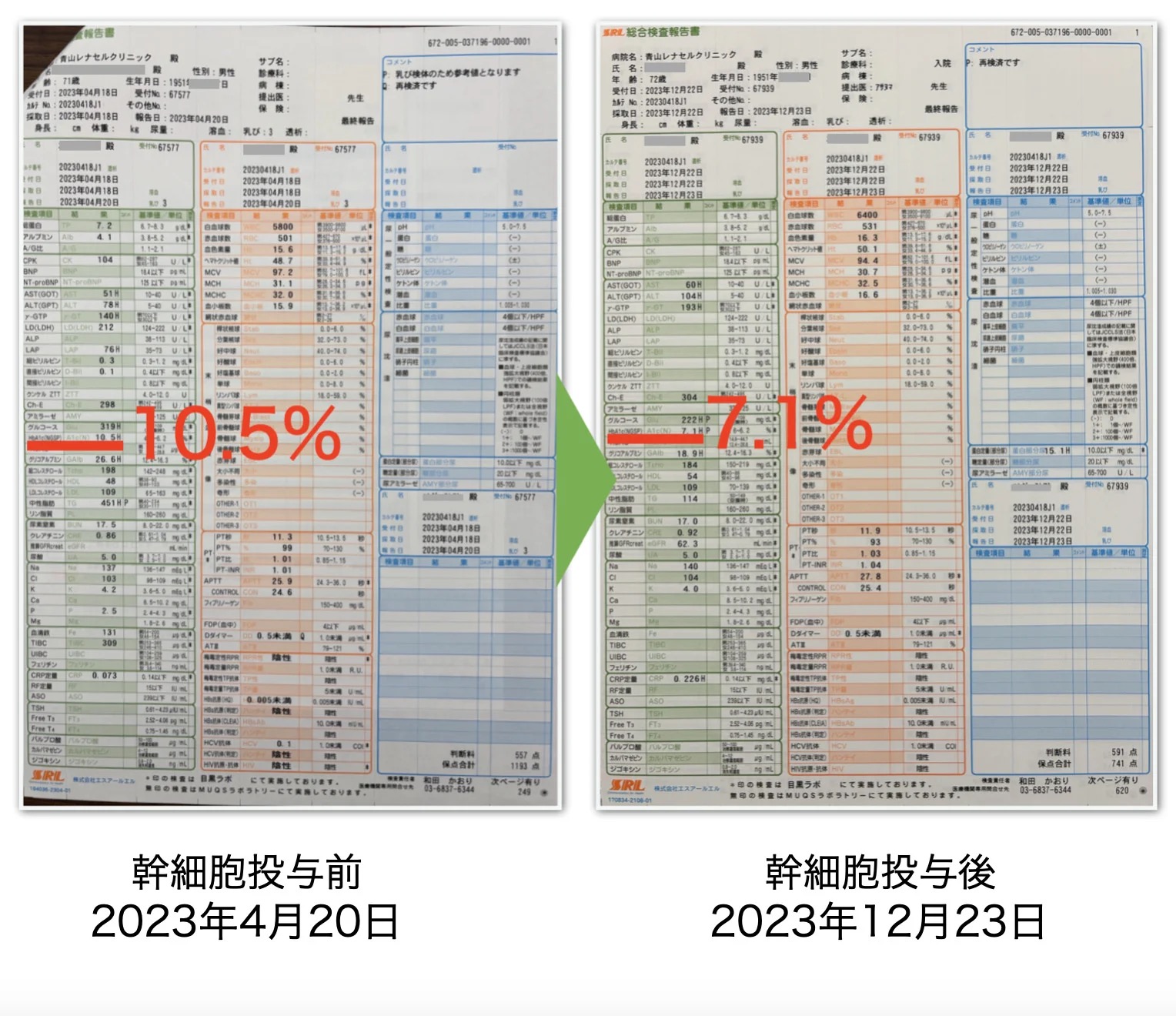
Case 2 — HbA1c Improvement
A patient in their 70s saw HbA1c improve from 10.5 to 7.1 after the first infusion.Private, professional, precise