Japan Medical
Tokyo, Japan International Patient Support
Contact Us
Current Evidence Guide

Ovarian Regeneration

Stem-cell approaches for POI and low ovarian reserve are being studied, but nobody should treat them as established fertility treatments. Current international POI guidance flatly states that no intervention has been reliably shown to increase ovarian activity and natural conception rates.[1]

POI, diminished ovarian reserve and poor ovarian response are related but different.
Hormone change, menstruation, pregnancy and live birth are not interchangeable outcomes.
Diagnosis and treatment decisions remain with the treating physician.
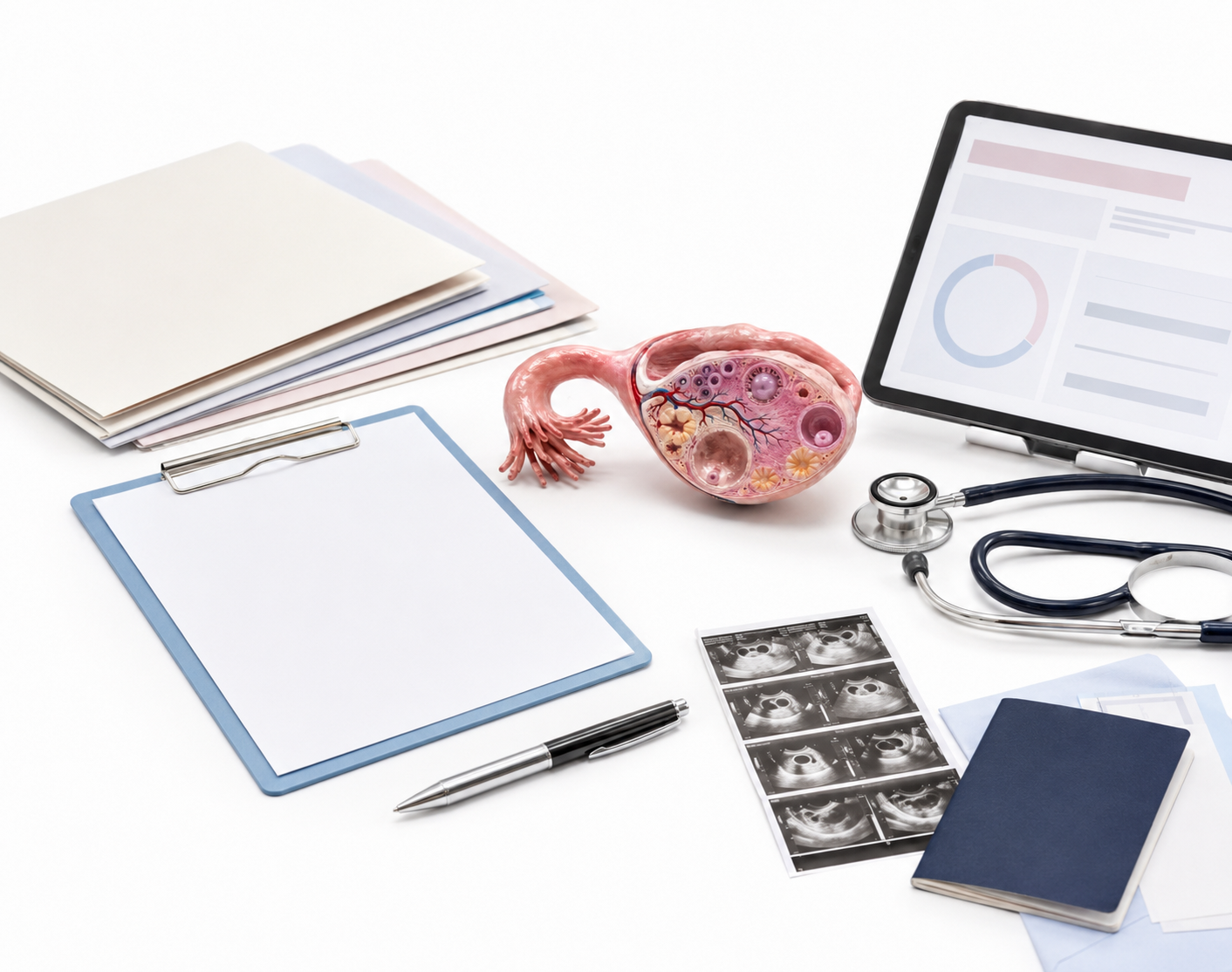
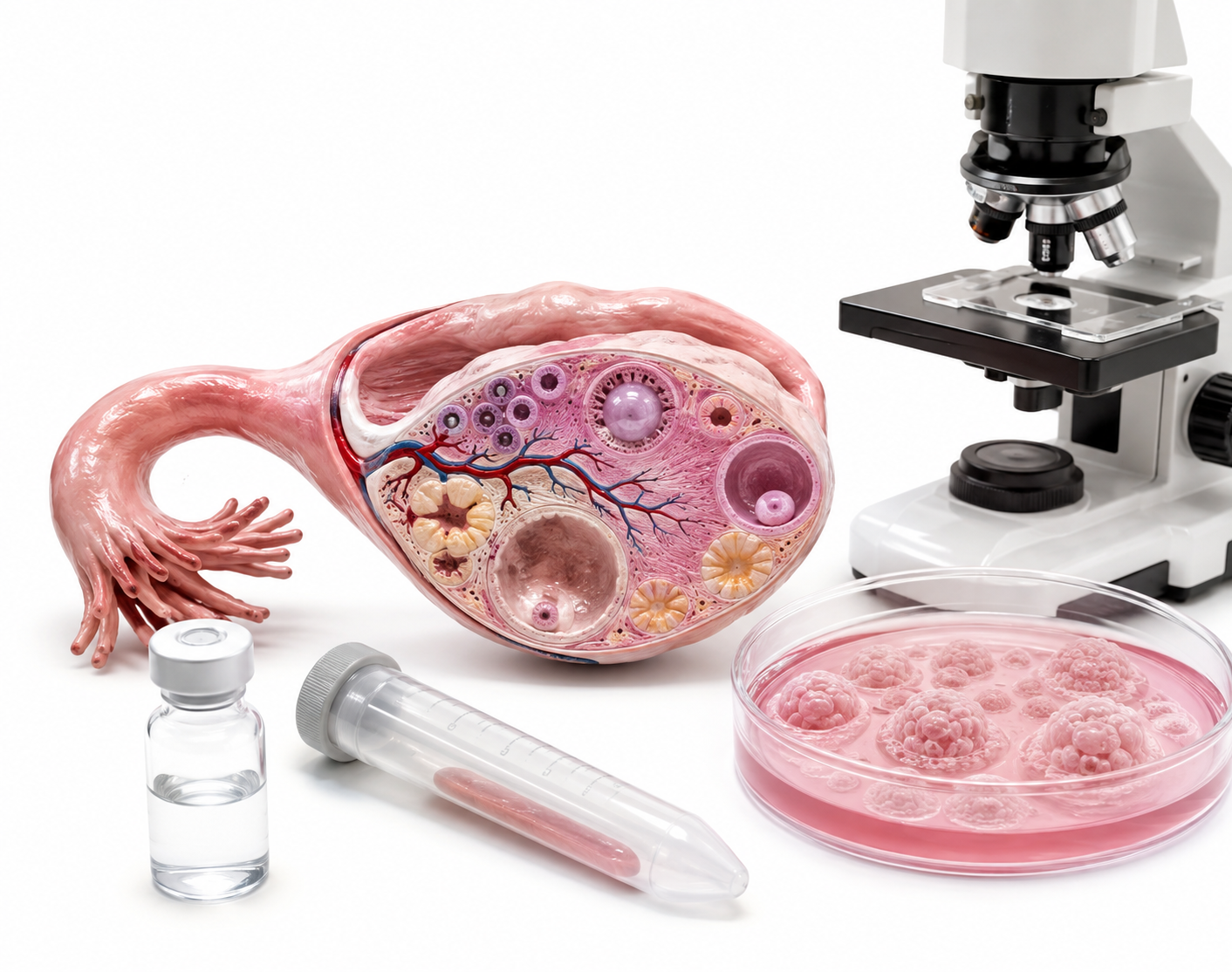
Medical information visual for ovarian regeneration and regenerative medicine
27studies included in a 2025 review of cellular therapies for POI and poor ovarian response.
694patients across mixed study designs, diagnoses, cell sources and procedures.[5]
77.8%of studies in the 2025 systematic review lacked control groups.
7–12 monthswas the most common follow-up window in the review.[5]
Before you compare research

Make sure the diagnosis is the same one studied.

POI, diminished ovarian reserve and poor ovarian response are related but different. Mixing them up can make a study result look more relevant than it really is.

01Diagnosis
POI
Premature ovarian insufficiency

Current guideline criteria include irregular or absent spontaneous cycles for at least 4 months plus FSH above 25 IU/L. A repeat FSH after 4 to 6 weeks is used when the diagnosis is uncertain. AMH is not the primary diagnostic test.[1]

DOR
Diminished ovarian reserve

AMH and antral follicle count are useful for estimating ovarian reserve and expected oocyte yield. They are much weaker independent predictors of egg quality, pregnancy and live birth.[3]

POR
Poor ovarian response

This describes a poor response during ovarian stimulation. A trial in poor responders should not automatically be used as evidence for a patient with established POI.

If previously regular periods stop for more than 3 months, or irregular periods stop for 6 months, medical evaluation is recommended. Pregnancy, thyroid disease, prolactin disorders, hypothalamic causes and POI are among the conditions that may need to be separated.[4]

If POI has been confirmed

Make sure the standard checks are not missing.

02Checks
01At diagnosis

TSH, bone density by DXA where available, lipid profile and diabetes screening.[1]

02Every year

At least blood pressure, weight and smoking status should be reviewed.[1]

031–3 years

DXA reassessment is recommended when low bone density or osteoporosis is present, based on individual risk.[1]

045 years

If TSH is normal, guideline follow-up is every 5 years or sooner when symptoms arise.[1]

If POI was not caused by surgery or medical treatment

Current guidance recommends chromosomal analysis and FMR1 premutation testing. Additional genetic testing may be discussed after genetic counselling.[1]

If the cause is unknown

21-hydroxylase autoantibody screening is recommended. A positive result should lead to adrenal-function assessment by an endocrinologist.[1]

Fertility is only one part of POI care

POI is also linked with bone and cardiovascular risk. Current guidance recommends hormone therapy until the usual age of menopause for primary prevention unless an individual contraindication changes the plan.[1]

Before spending time or money on an investigational option, confirm that the diagnosis, possible cause and long-term health risks have been assessed.

What published studies have found

What published studies have actually reported.

03Evidence
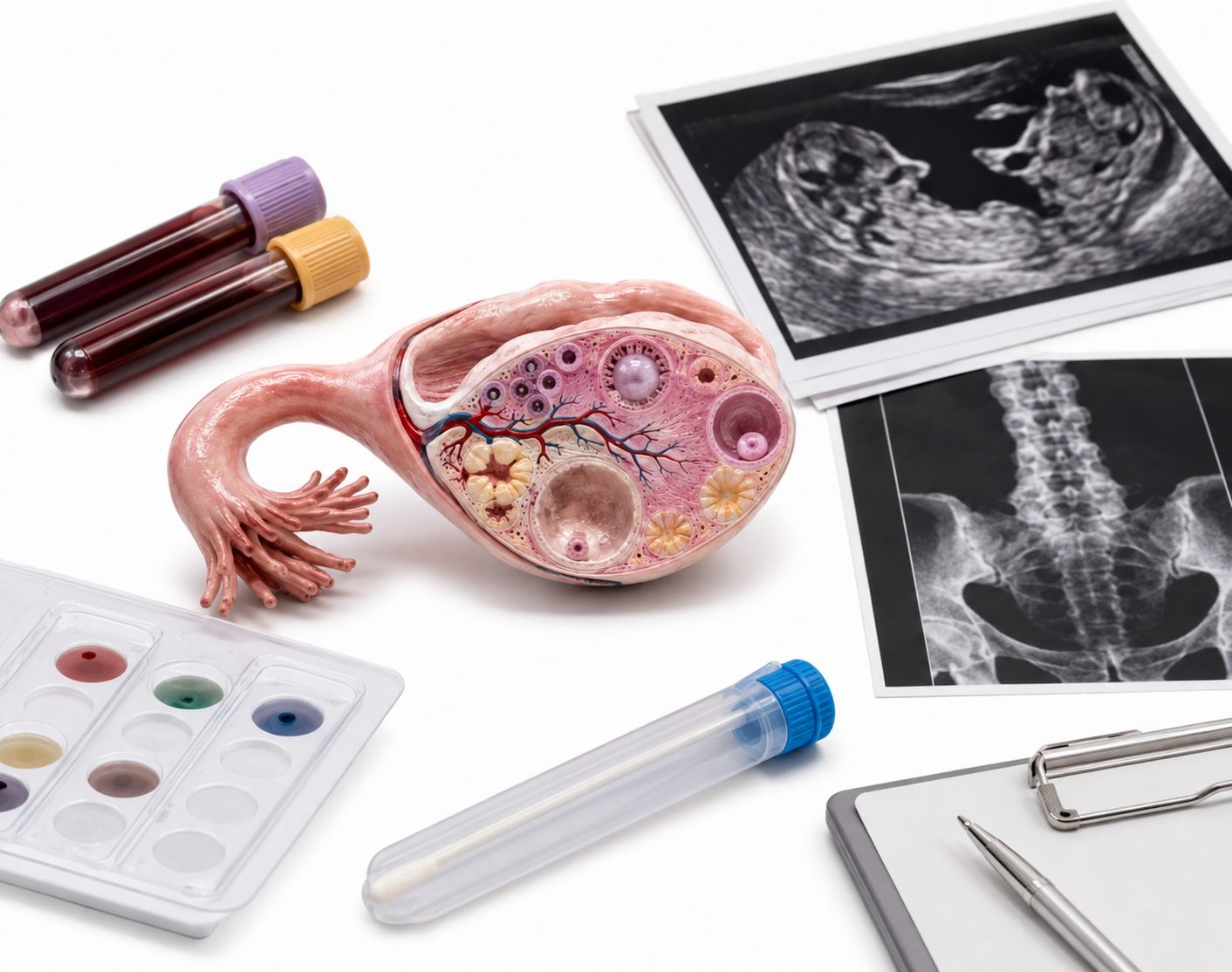
Medical evidence review visual for ovarian regeneration research

The 2025 systematic review found that 77.8% of included studies lacked control groups—and 7 to 12 months was the most common follow-up window. The authors called for larger trials and standardized protocols.[5]

Patients received cellular interventions across the included reports.522
Treated patients were reported pregnant, equal to 11.7% of the pooled treated group.60
Control patients were reported pregnant, equal to 7.6% across the pooled controls.13 / 172
Treated patients resumed menstruation, equal to 7.1% of 522.37

These are descriptive totals pooled from different study designs, not a randomized head-to-head estimate. In the same review, 85.2% of studies used autologous cells and 70.3% used intraovarian delivery, showing that “stem-cell treatment” was not one standardized protocol. Do not read the pooled pregnancy counts as your personal probability of pregnancy.[5]

01
2021 Phase I

Autologous adipose-derived stromal cells in idiopathic POF

9 women. Three dose groups received 5, 10 or 15 million cells into one ovary. The study was non-randomized and primarily assessed safety, feasibility and dose.

Four of nine participants resumed menstruation. With no control group and only nine participants, this cannot establish a reliable fertility benefit. [6]

02
2020 Phase I/II

Menstrual-blood-derived stromal cells in poor ovarian responders

15 treated participants were compared with 16 receiving routine ICSI. This population was poor ovarian responders, not a pure POI group.

The paper reported clinical pregnancy in 7 of 15 treated participants and 2 of 16 controls, with 5 versus 1 live births. The sample was small and should not be generalized to every diagnosis. [7]

03
2025 Observational

G-CSF mobilization plus stem-cell-factor-enriched PRP

145 women with POR, DOR or POI were included. This was a retrospective combined protocol, not a randomized trial of one isolated stem-cell treatment.

The study reported 68.28% meeting its defined ovarian-activation endpoint; the abstract reported 7.07% spontaneous gestation and 14.14% pregnancy after IVF. Activation was based on AFC and/or AMH change, not live birth. [8]

Evidence Still Being Built

A larger randomized study has been designed, but a protocol is not a result.

A 2025 BMJ Open protocol plans to compare autologous fat-derived stromal vascular fraction (SVF) plus assisted reproduction with assisted reproduction alone in women with POI. Its design shows the level of evidence still needed before benefit can be considered established.[11]

planned participants308
randomized allocation1:1
primary cumulative clinical-pregnancy endpoint6 months
planned pregnancy and offspring follow-up2 years
How to read outcomes correctly

A higher lab number is not the same as a live birth.

When you compare an offer with a study, ask for the exact endpoint, denominator and follow-up period.

04Outcomes
“Survival rate” is not the right measure here.

POI and DOR are not evaluated by patient survival. For fertility, the more meaningful endpoints are oocyte retrieval, usable embryos, ongoing pregnancy and live birth.

AMH or AFC

Can help describe ovarian reserve or expected oocyte yield. They do not prove restored fertility.[3]

Menstruation

Cycle return is relevant, but it does not confirm ovulation, egg quality or pregnancy.

Oocytes

Ask how many participants reached retrieval and how many oocytes were mature, not only how many follicles were seen.

Pregnancy

Confirm whether the number means biochemical, clinical or ongoing pregnancy and whether IVF was used.

Live birth

This is the clearest reproductive endpoint, but current cellular-therapy datasets remain too small and heterogeneous for a universal rate.

Safety and what to verify

Know what is being placed in the body and how it is regulated.

“Stem cell” isn’t a complete product description. The cell source, processing, dose, sterility testing, administration route and follow-up all matter.

05Safety
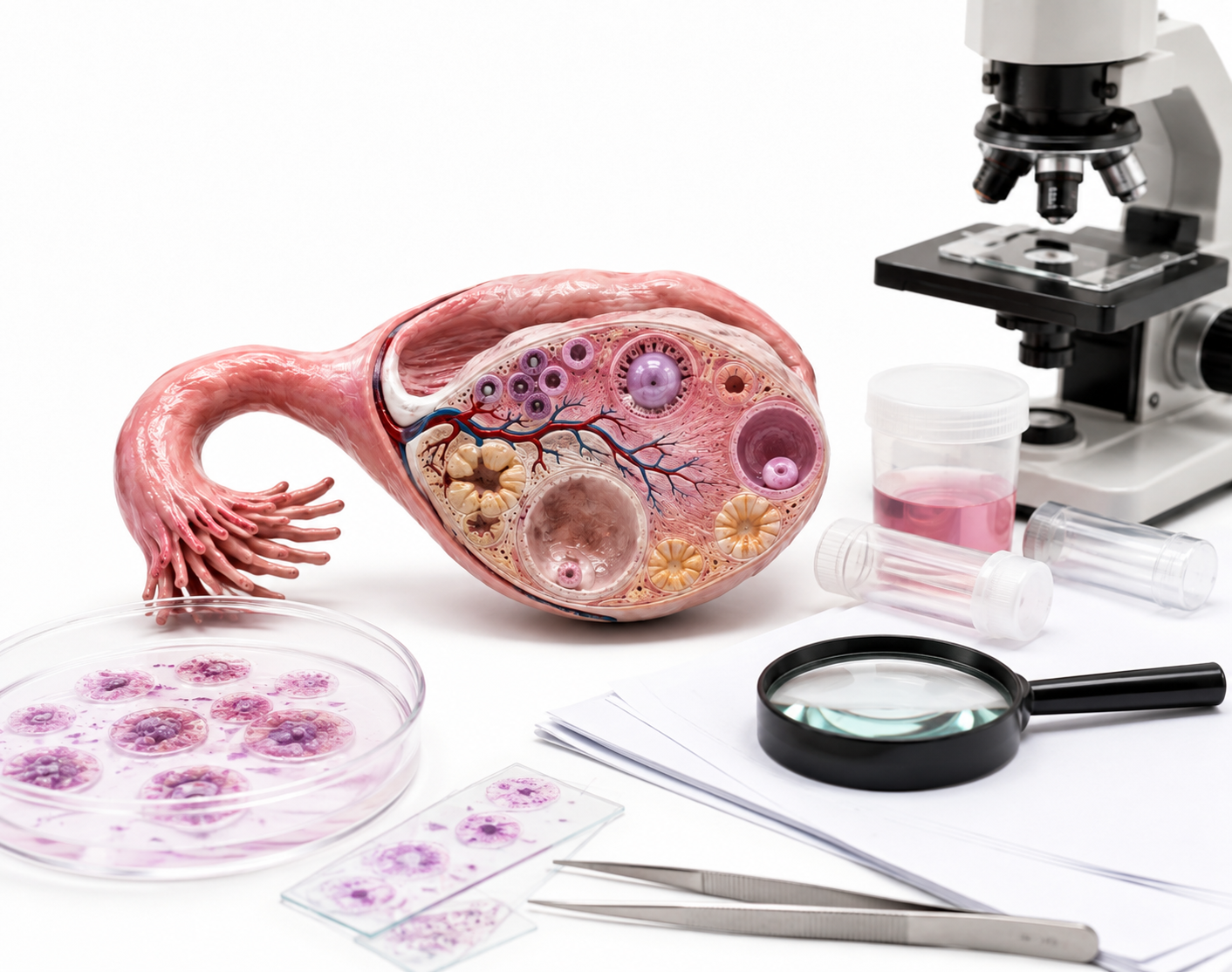
Medical quality and safety information visual for regenerative medicine

Exact material

Ask whether cells are autologous or donor-derived, the tissue source, cell type, dose, culture or processing steps and whether any PRP, growth factor or other component is added.

Manufacturing and sterility

Request written information on identity, contamination controls, sterility testing, traceability, batch release and the handling chain from collection to administration.

Procedure and biological risk

FDA has received reports of serious harm from unapproved regenerative products, including tumor formation and infections. These reports are not an ovarian-specific complication rate, but they show why product identity, sterility, processing and follow-up matter.[9]

Specific regulatory status

Japan has formal regulatory frameworks for regenerative medicine, but that does not make every ovarian protocol proven or approved. Ask for the status of the exact product and procedure being discussed.[10]

Costs and recovery

Do not compare prices until the scope is itemized.

06Costs

What a useful cost breakdown should show

AssessmentRecord review, consultations and required laboratory or imaging checks.
CollectionAny blood, bone marrow, adipose or other tissue collection required by the protocol.
ProcessingCell isolation, culture, testing, storage, transport or related preparation.
ProcedureAdministration route, medications, sedation and procedure-related charges.
Follow-upRepeat labs, ultrasound, fertility procedures and the length of follow-up included.
Travel supportInterpretation, appointment coordination and any separate travel costs.

What to ask about recovery and follow-up

RouteTransvaginal, laparoscopic, intravenous and combined protocols have different procedural burdens.
TravelAsk when normal activity and air travel are considered appropriate for the exact procedure.
Warning signsGet written instructions for pain, bleeding, fever or other symptoms that need urgent review.
MonitoringConfirm which outcomes will be measured, when they will be measured and what would count as a meaningful change.
Fertility planAsk whether IVF, embryo transfer or expectant management is planned and whether time away from established care is required.
Long termThe 2025 review found 7 to 12 months was the most common follow-up window, while noting this may still be inadequate for long-term safety.[5]

There’s no evidence-based standard price or universal recovery schedule because investigational protocols differ in cell source, processing and administration.

Don’t delay proven care while you research

Research should be compared with the options that already have guideline support.

The right parallel plan depends on whether your priority is fertility, low-estrogen symptoms, long-term health or fertility preservation before gonadotoxic treatment.

07Care
POI and natural conception

Ovarian activity can sometimes occur in non-surgical POI, but no intervention has been reliably shown to increase ovarian activity and natural conception rates.[1]

Hormone therapy and long-term health

For women with POI, current guidance recommends hormone therapy until the usual age of menopause for prevention of morbidity and mortality, unless individual factors require another approach.[1]

Pregnancy after POI

Oocyte donation is an established option after POI. This is different from an investigational attempt to change ovarian function and should be discussed separately.[1]

DOR and IVF planning

AMH and AFC can help predict expected oocyte yield, but age remains a much stronger predictor of reproductive success than ovarian-reserve markers alone.[3]

POI health monitoring

Current guidance recommends DXA at diagnosis where available, lipid and diabetes screening at diagnosis, and at least annual review of blood pressure, weight and smoking status.[1]

Where we help

Turn scattered information into a clear next-step plan.

We provide medical information support and Japan medical coordination. We can organize records, clarify published evidence, prepare questions, coordinate appointments and support medical interpretation. Diagnosis and treatment decisions stay with the treating physician.

08Support
01

Organize your records

We identify the dates and results that matter most so you are not sending an unreadable mix of screenshots, old reports and repeated tests.

02

Separate evidence from claims

We compare the diagnosis, cell source, route and outcome used in published studies with the information you have received, without promising a result.

03

Prepare communication in Japan

We help coordinate appointments, organize the questions you want answered and support interpretation so you understand what is included before you travel or commit.

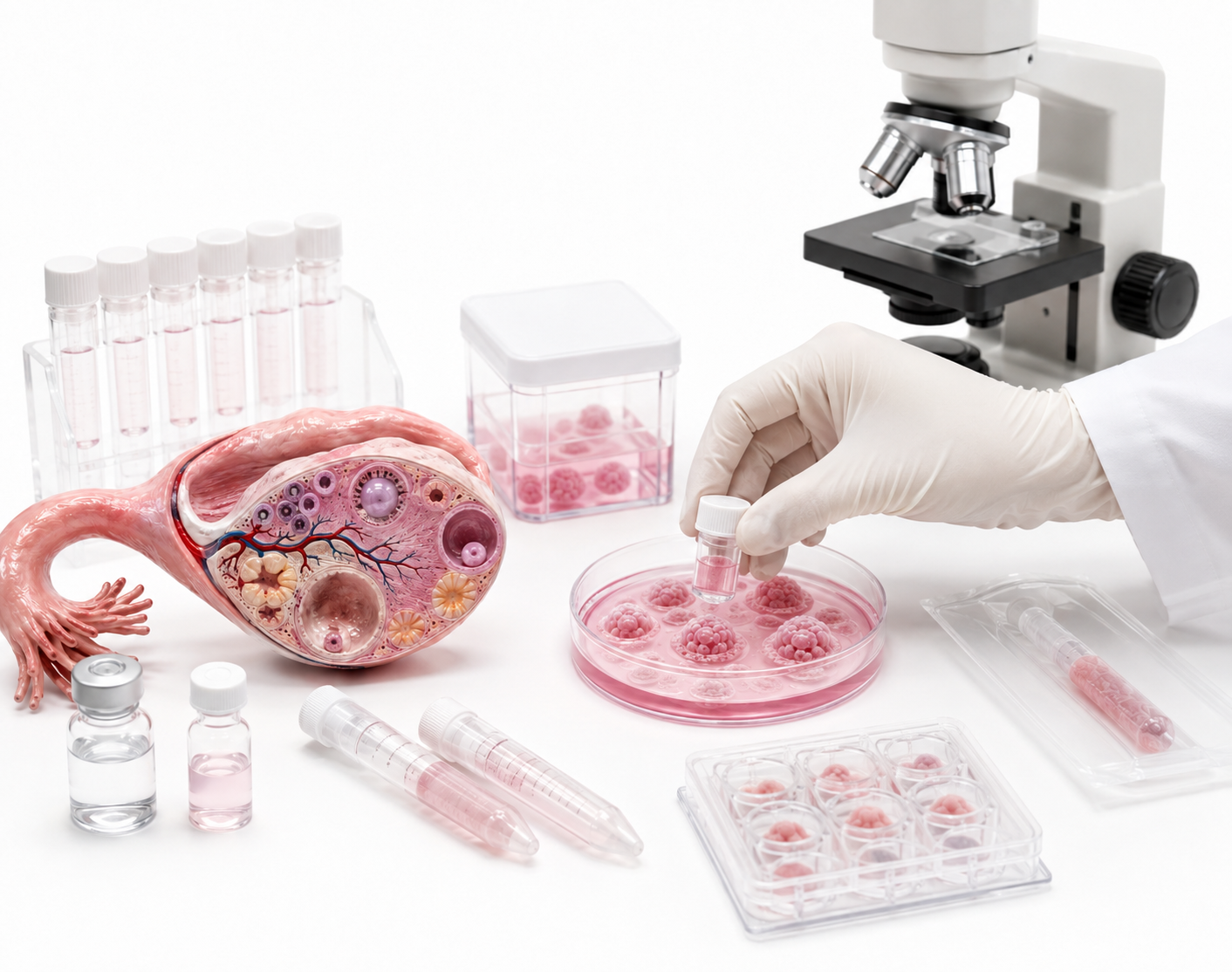
Medical record review and Japan medical coordination support visual

You do not need to decide first. Send the information you already have and start by identifying what is missing.

Send What I Have
What to have ready

Send the records that can change the discussion.

A short, dated record set works better than sending every report you’ve ever received.

09Records
01
PROFILEAge, pregnancy history, main goal and how long you have been trying to conceive if fertility is the priority.
02
CYCLESUsual cycle length, when irregularity began, date of the last menstrual period and any period of amenorrhea.
03
HORMONESDated FSH and estradiol results, AMH, plus TSH or prolactin results when available.
04
ULTRASOUNDPelvic ultrasound, antral follicle count and any ovarian findings that affected prior care.
05
IVF HISTORYStimulation protocol, follicles, oocytes retrieved, mature oocytes, fertilization, embryos, transfer and outcome for each cycle.
06
MEDICAL HISTORYOvarian surgery, chemotherapy or radiotherapy, autoimmune or genetic findings, current medications and hormone therapy.

WhatsApp: +81-8070161366    LINE: +81-8075357788

Quick Answers

Questions worth resolving before any decision.

11FAQ
Is stem-cell ovarian regeneration proven for POI?

No. Human studies have reported signals such as hormone changes, menstrual return and pregnancies, but current international POI guidance states that no intervention has been reliably shown to increase ovarian activity and natural conception rates. Protocols are still heterogeneous and investigational. [1]

What is the real success rate?

There is no validated universal percentage. The 2025 review combined 27 studies and 694 patients, with most studies lacking control groups and using different diagnoses, cell sources and endpoints. Use live birth or another clearly defined endpoint rather than a marketing percentage based on AMH or AFC change. [5]

Can AMH improve without fertility being restored?

Yes. AMH is mainly a marker of the follicular pool and expected ovarian response. ASRM notes that AMH and AFC predict oocyte yield better than pregnancy or live birth, and age remains more important for reproductive success. [3]

What should be checked if I have confirmed POI not caused by medical treatment?

Current guidance recommends chromosomal analysis and FMR1 premutation testing for non-iatrogenic POI. If the cause is unknown, 21-hydroxylase autoantibodies should be checked. TSH, bone density and cardiovascular risk also need attention because POI affects more than fertility. [1]

Should I stop established care while researching this?

Do not make that decision from online material alone. For POI, guideline-supported care addresses low-estrogen symptoms and long-term bone, cardiovascular and other health risks. Fertility options should be discussed in parallel so an experimental approach does not unintentionally delay time-sensitive care. [1]

What should I ask before paying anything?

Ask for the exact diagnosis being treated, cell source and dose, processing method, administration route, regulatory status, written risks, total itemized price, follow-up schedule, outcome definition, published evidence for patients like you, cancellation terms and what happens if the procedure cannot go ahead.

Patient information visual for ovarian regeneration questions and evidence review
Private Contact

Get the information clear before you commit.

Send your basic details, recent results and the questions you want answered. We can help organize the information and coordinate the next steps in Japan.

WhatsApp: +81-8070161366. LINE: +81-8075357788.

This page is educational—it doesn’t diagnose a condition, prescribe treatment, guarantee an outcome or replace care from a qualified physician. The cellular approaches described here are still investigational for ovarian indications.