
Last checked 10 August 2026
Knee Joint DisordersWhat stem cell therapy may—and may not—change for your knee.
If you have knee OA, the best current review found a small pain and function benefit over placebo at about six months. It didn’t establish a cure, reliable cartilage regrowth, or any guarantee you can avoid surgery.[1]
We organize your records, help prep questions for providers, coordinate appointments and handle translation. But the diagnosis—and any treatment decision—belongs to your doctor.

What the best data actually tell us
The average benefit is modest, and the certainty is low.
The 2025 Cochrane review pulled together 25 randomized trials covering 1,341 people. Eight were placebo-controlled, with 459 participants. One big problem: every study used a different cell source, prep method and dose.[1]
The quality-of-life evidence was very uncertain, and not one trial tracked whether OA actually got worse on X-rays. These are group findings—they can’t predict what will happen to your knee.[1]
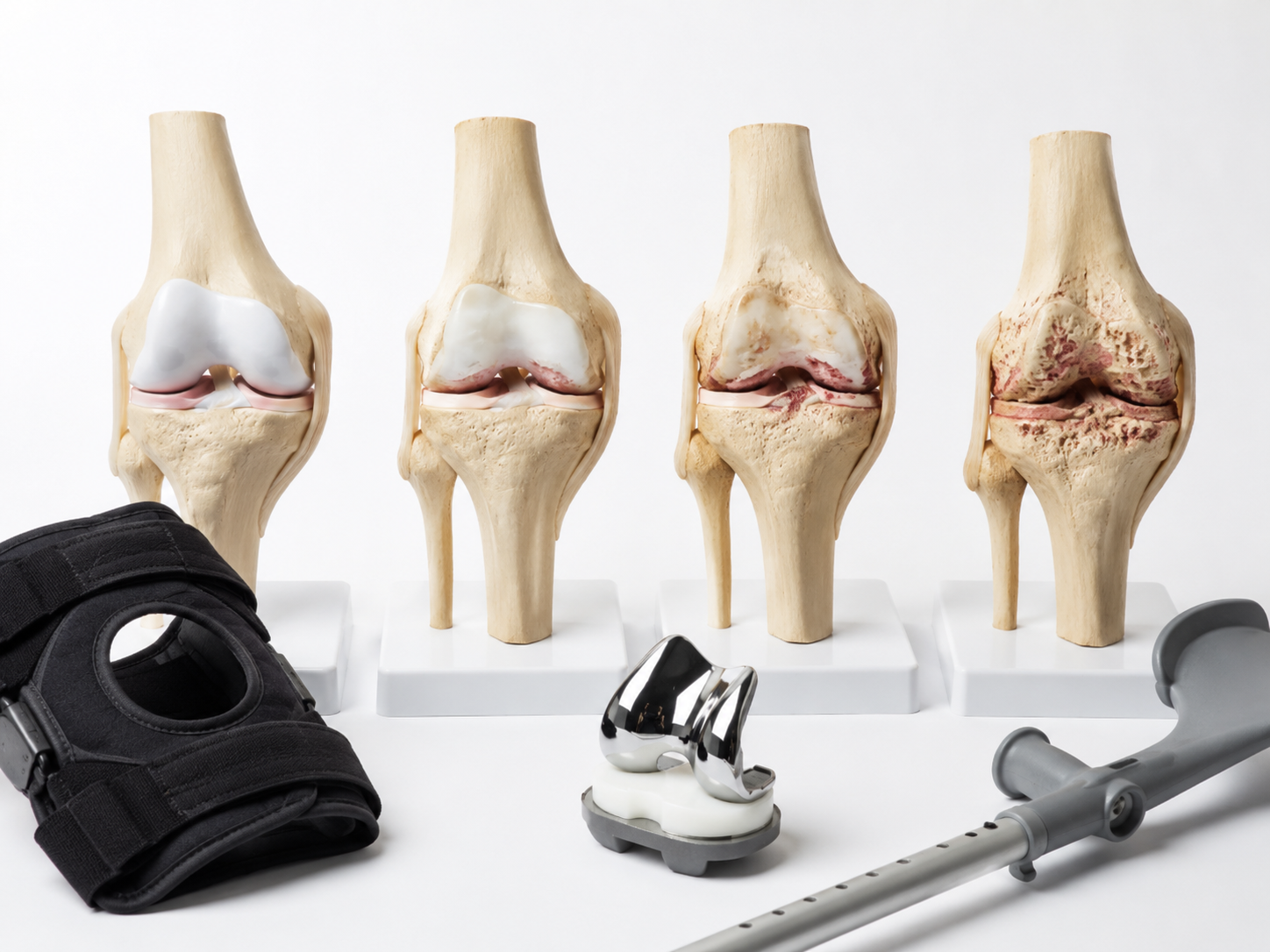
Does the research resemble your case?
Most useful data are for diagnosed knee osteoarthritis.
What improvement actually looks like
Pain and function can improve. Structural repair is not established.
In the 261-person phase III trial, improvement on a 100-mm pain scale was 25.2 mm with the cell product versus 15.5 mm with placebo at six months, a 9.7-mm between-group difference.[2]
In the same trial, total WOMAC improvement was 21.7 versus 14.3 points at six months. This result applies to that exact product and grade 3 OA population.[2]
The 261-person trial found no significant difference in cartilage-defect change at six months. The 480-person trial also found no significant MRI osteoarthritis-score change at one year.[2][10]
No reliable percentage can be given for avoiding a future knee replacement. The trials above were designed mainly around pain, function and shorter-term imaging outcomes.
Do not compare only the word “stem cell”
First identify the exact cell product.
Two quotes can describe very different products. Before you compare prices or expected results, get the same six details in writing.
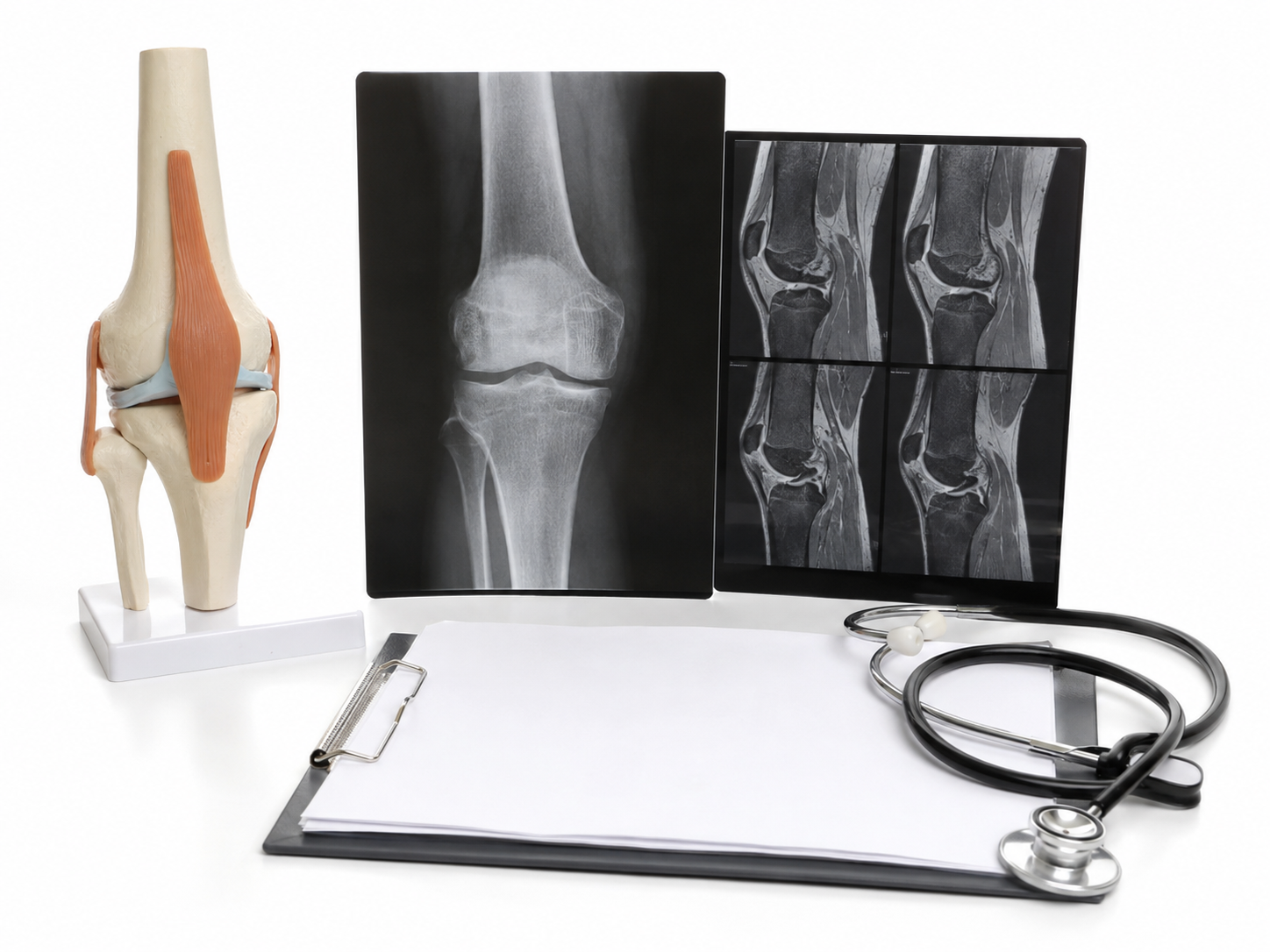
Safety and regulation
Short-term safety data are reassuring, but incomplete.
No infection, fat embolism or other medical complication was reported in the included studies; local pain and swelling generally lasted less than four weeks. The authors still called for longer-term safety data because protocols varied.[3]
A 2026 meta-analysis of 28 randomized trials found more injection-site pain (RR 2.04) and joint swelling (RR 3.39) with MSC-based therapies, while serious complications remained uncommon and were not significantly increased.[12]
FDA states that regenerative medicine therapies are not approved for orthopedic conditions such as osteoarthritis or knee pain. It also warns that unapproved products can carry contamination, infection, immune-reaction and other risks.[4]
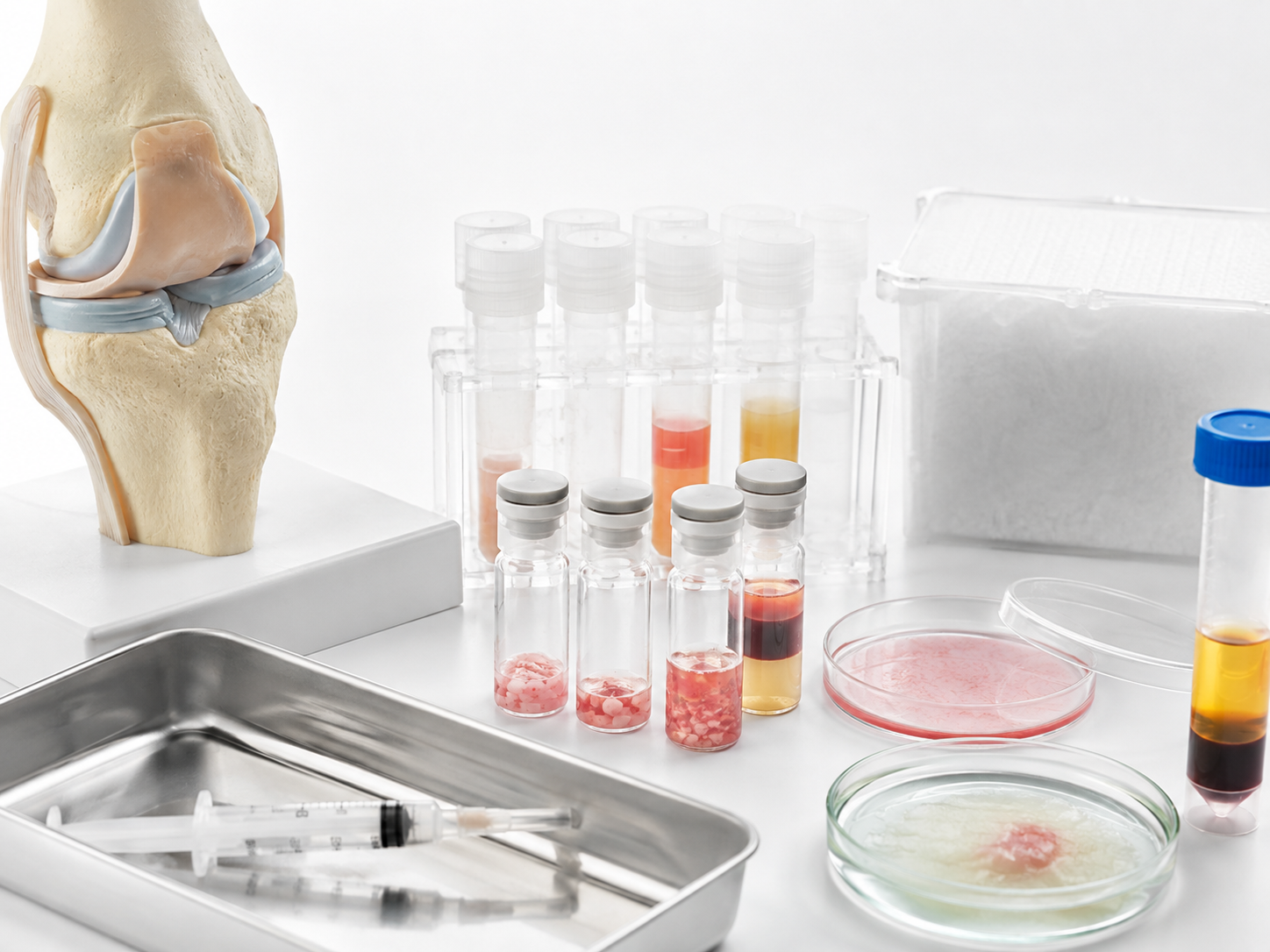
What prices actually look like
Prices can vary sharply even within one market.
These figures come from a 2025 Chicago-area market study and are not a Japan price or personal quote. The study found significantly higher and more variable prices in the first group.[7]
What recovery actually looks like
Use fixed checkpoints so you can tell whether anything changed.
Ask how pain and function will be measured, when each review happens, what activity plan is expected, and what the next step is if there is no meaningful improvement.
Get a Clearer PlanWhere your case sits
Your OA grade and current function change the decision.
AAOS patient guidance also notes that evidence is not strong enough to show injected stem cells reliably build healthy new tissue, and advanced arthritis is commonly managed with joint replacement.[9]
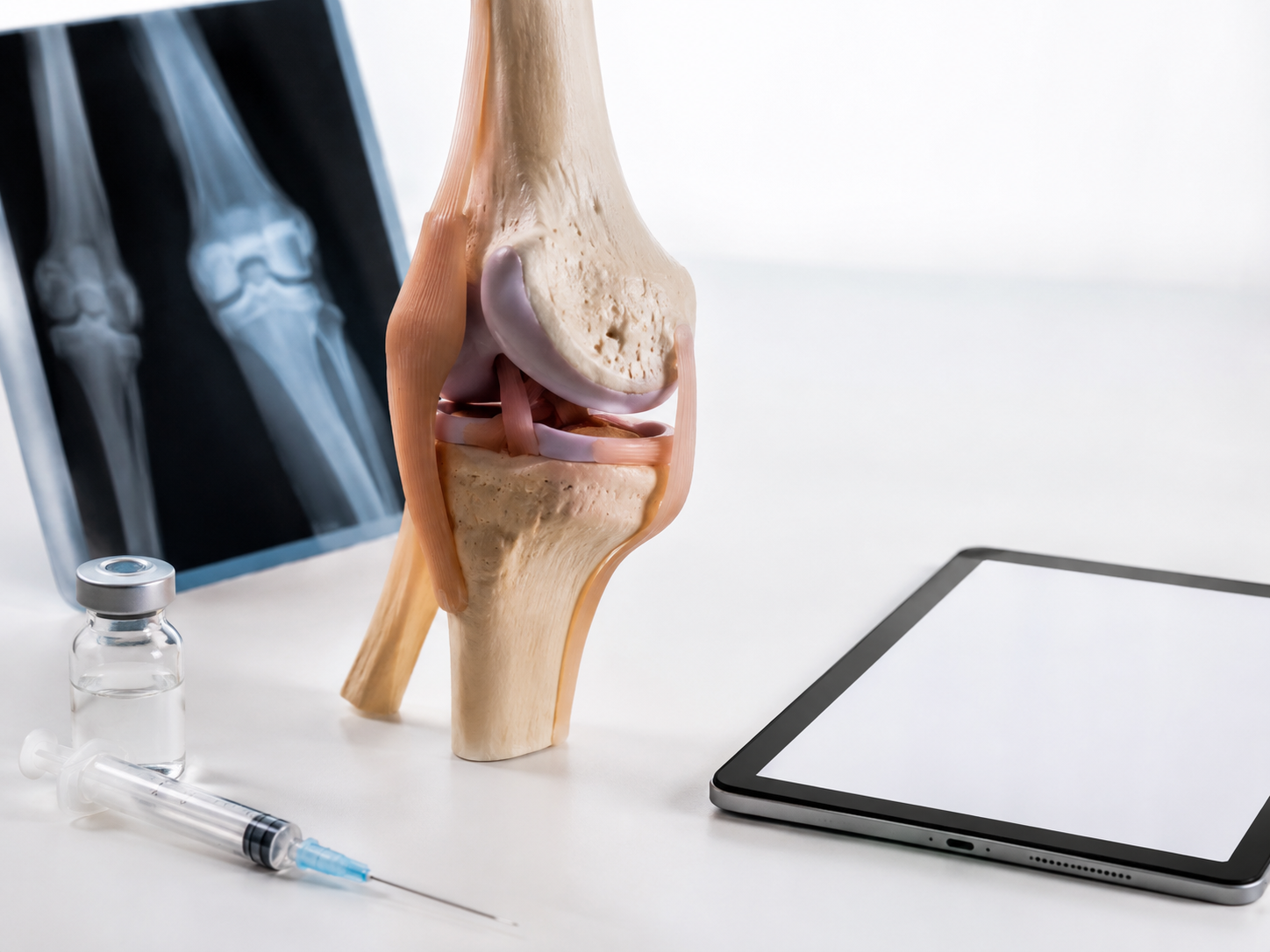
The trials behind the numbers
Large studies do not all give the same answer.
For one autologous culture-expanded adipose-derived MSC product in K-L grade 3 OA, pain and WOMAC improved more than placebo at six months. MRI cartilage-defect change was not significantly different.[2]
No MRI difference
Bone-marrow aspirate concentrate, stromal vascular fraction and umbilical-cord-tissue MSCs were compared with corticosteroid. At one year, none was superior for the primary pain outcomes; MRI scores did not significantly change.[10]
440 primary analyses
Twenty-five randomized trials and 1,341 participants. Compared with placebo, stem-cell injections may slightly improve pain and function up to six months, but certainty was low.[1]
Low certainty
Modest pain benefit and improvement in selected KOOS domains were reported, but MRI-based WORMS did not show consistent structural benefit. Local injection pain and swelling were more frequent.[12]
No consistent MRI benefit
Twenty-nine participants completed a phase I/II study. Placebo blinding lasted 12 months; the treated arm then continued follow-up. Clinical improvement declined after 36 months and approached baseline at 60 months.[8]
Small sample

Where we fit in
Turn scattered records and claims into a clearer decision file.
We don’t diagnose, prescribe, guarantee eligibility, promise a cure or tell you whether to go ahead. That kind of decision needs a licensed doctor who’s examined you.
Things to nail down before you pay
Use the study details, not a headline claim.
If someone gives you an exact success percentage, ask which cell product, OA grade, outcome measure and follow-up period produced that number.
Can stem cells cure knee osteoarthritis?
What is the success rate?
Does MRI show cartilage regrowth?
Could this help me avoid knee replacement?
How soon would I know whether it helped?
What should I ask about the cells?
What records are useful for a first review?

The evidence and regulation we relied on
Evidence used for the statements above
Evidence and rules change. This information is educational—it can’t stand in for a diagnosis, a prescription or a personal risk assessment from your own doctor.
Start with what you already have
Send your records, your current quote, or the questions you cannot get a clear answer to.
We’ll help you organize the information, spot what’s missing, prepare verification questions and get the cost and follow-up details into one clear file—before you decide what to do next.