

LIVER & KIDNEY DYSFUNCTION
Liver and Kidney Dysfunction
Stem-cell therapy supports hepatocyte regeneration, anti-fibrotic action and renal microenvironment improvement.
SCROLL
Organ-Level Repair
Address Liver & Kidney Decline at the Cellular Source
The liver performs more than 500 vital functions—from detoxification and metabolism to immune regulation. Once fibrosis progresses, it is generally considered irreversible, leaving liver transplantation as the only curative option. Similarly, chronic kidney disease progresses silently toward renal failure. Stem-cell therapy aims to regenerate hepatocytes, dissolve early fibrosis, modulate renal inflammation and restore the microenvironment of both organs.
Why Conventional Therapy Often Cannot Reverse Damage
A deeper, more considered approach
- Antiviral drugs control virus but do not restore hepatocytes.
- Anti-fibrotic drugs are limited and slow-acting.
- Liver transplantation has donor shortages and lifelong immune risk.
- Kidney disease progresses silently until late-stage renal failure.
- Standard medications carry long-term side effects.
Hepatorenal Repair Standard
Why Stem-Cell Therapy Represents a New Standard for Liver & Kidney Care
Anti-Fibrotic Action
Stem cells secrete MMPs and anti-fibrotic cytokines that help dissolve early-stage fibrosis.Immune Regulation for Hepatitis
In autoimmune hepatitis, MSCs rebalance overactive immune responses.Renal Microenvironment Repair
Stem cells support glomerular and tubular cell survival, slowing CKD progression.Detox & Metabolic Support
Improved hepatic function restores detoxification, energy metabolism and lipid balance.Autologous, Low-Risk Source
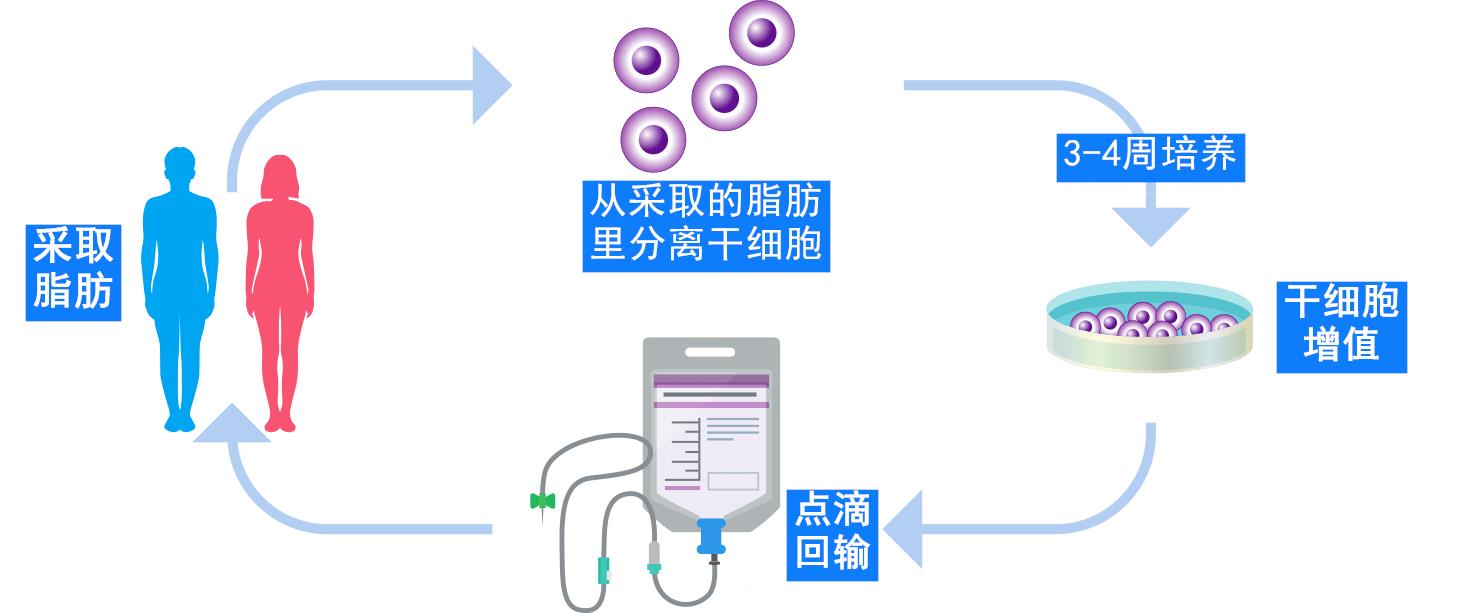
Treatment uses the patient’s own adipose-derived stem cells, avoiding immune rejection and tumor risk.Recovery Indicators
Improvements Patients May Experience
- Improved AST, ALT and γ-GTP values in follow-up testing
- Reduced fatigue and easier physical activity
- Improved appetite, digestion and alcohol tolerance
- Stabilized eGFR and reduced proteinuria for early-stage CKD
- Lowered risk of progressing to cirrhosis or liver cancer
Suitable Candidates
Designed for individual needs
- Patients with chronic hepatitis B/C and progressive fibrosis
- Patients with mild to moderate cirrhosis awaiting transplantation
- Patients with non-alcoholic fatty liver disease (NAFLD/NASH)
- Patients with early to mid-stage chronic kidney disease
- Those seeking to avoid long-term medication and its side effects
Patient Stories
Observed changes and clinical stories

Liver Fibrosis Stabilization
After serial adipose-derived MSC infusions, a patient with chronic hepatitis B showed stabilized fibrosis markers and improved energy levels.Early-Stage CKD Support
A patient with stage 2-3 CKD received MSC therapy. eGFR trend stabilized and reported fatigue improved within months.Private, professional, precise